Back in the 1980s, I tended to favor Marvel Comics, and still prefer the format of The Official Handbook of the Marvel Universe over all other comic book references. That said, I have plenty of affection for DC's answer to it, Who's Who: The Definitive Directory of the DC Universe. Marvel's books were more text based, with a single static image of a character useful as an artist's reference, and licensing friendly uniform inking by Josef Rubinstein. Who's Who was more about showing the variety of character types and artists across the five decades of history they were celebrating mid-decade. While I enjoyed the '80s incarnation, I didn't really immerse myself in DC lore until the Post-Crisis period. I tend to like the early '90s looseleaf editions better, thanks to characters and artists I was into at the time. They were also enhanced by supplements published by Mayfair Games that offered more quantifiable powers/abilities and other pertinent details along the lines of the Marvel Handbook (which became garbage in their own skimpy looseleaf version.)

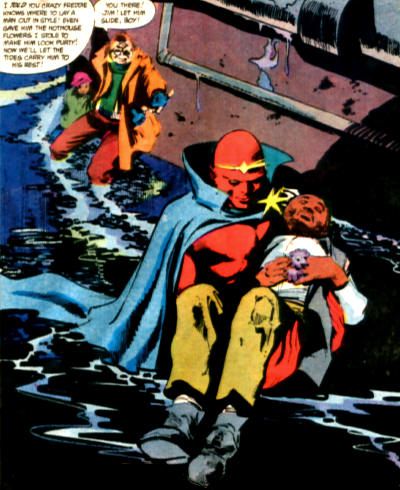
Anyway, Who's Who is a lot of fun to revisit, and since DC apparently will never get around to a long-promised Showcase Presents collection, WHO’S WHO: The Definitive Podcast of the DC Universe offers the next best thing to eBay/illegally downloaded PDFs. Rob Kelly of Aquaman Shrine and Shag Matthews of Firestorm Fan spend better than an hour discussing each issue of the series from A to Z and back again. Volume I covers Abel through Auron, while Volume II handles Automan through Blackhawk Island (with an emphasis on Batman.) They're well worth your time as you trot down Nostalgia Avenue to a simpler, more innocent time of Earths conquered by the Nazis, guys getting caught in nuclear meltdowns while trying to get laid, toddlers suffocated by maniacs attempting to create an undersea kingdom for black people, and whatever the hell Thriller was supposed to be.

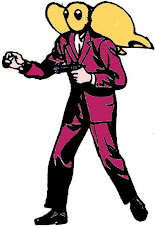
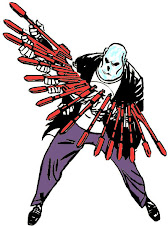
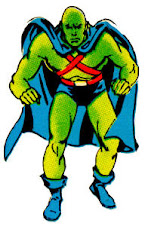
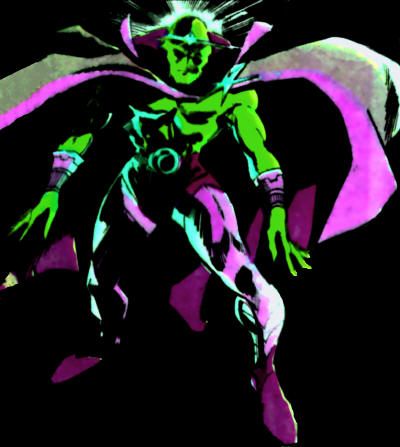
I will warn you though that one of the biggest lies DC ever told was that Who's Who was any kind of "Definitive Directory." They were extremely subjective and not a little random in who they spotlighted, and it should come as no surprise that the Martian Manhunter's expanded universe was literally represented solely by the Martian Manhunter getting his own entry. This blog might not have to exist if DC had bothered to include even 5% of what we handle, but they didn't, so here's some links from the creeping inevitability that is our own Martian Fanhunter encyclopedia, including rationales on why DC should have honored them...
- Alex Dunster: Thieving scientist who stole Professor Erdel's robot brain and used it to teleport before being captured in "Escape To The Stars" from Detective Comics #228 (1956.)
- Aldo Szuzi: A French millionaire who despite being friends with Marco Xavier was targeted by Vulture in "Marco Vs. Manhunter” from House of Mystery #164 (1967.)
- Andy Fletcher: The jewel thief who was foiled in "The Dog With A Martian Master" from Detective Comics #232 (1956.)
- The Beings in the Color Rings: Creatures from another plane that tried to steal all the color from Middletown in "The Beings in the Color Rings" from House of Mystery #148 (1965.)
- B'enn B'urnzz: A Green Martian criminal escaped from the year 2062 who fought J'onn J'onzz to a standstill in "J’onn J’onzz vs. Futureman" Detective Comics #305 (1962.)
- B'rett: The yellow-skinned Martian who revealed J'onn J'onzz's existence on Earth, leading to his joining the Justice League of America. Appeared in "The Unmasking of J’onn J’onzz" from Detective Comics #273 (1959.)
- Baron Voto: A bad guy from the nation of Lavonia who used a magic ring against the Martian Manhunter in "The Day John Jones Vanished" from Detective Comics #308 (1962.)
- Bel Juz: The femme fatale who tried to sell out the survivors of Mars to evil aliens in "...And So My World Begins" from World's Finest Comics #212 (1972.) Initiated "The War of the Worlds: 1984," which caused the destruction of the iconic Justice League Satellite and instigated the disbanding of the associated incarnation of that team. She absolutely should have appeared in Who's Who.




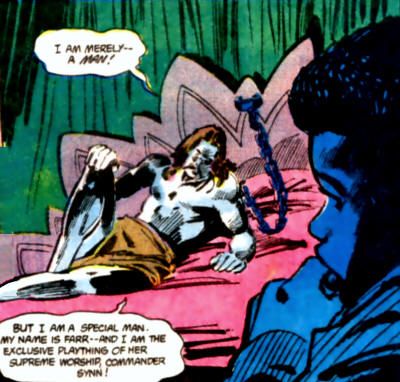
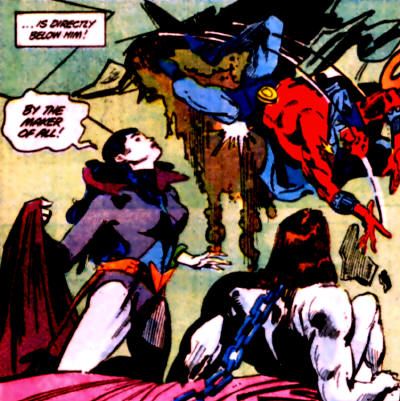
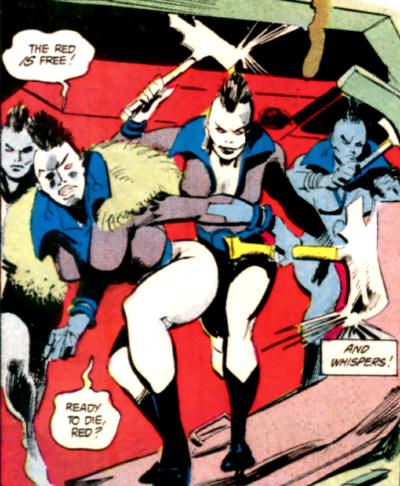


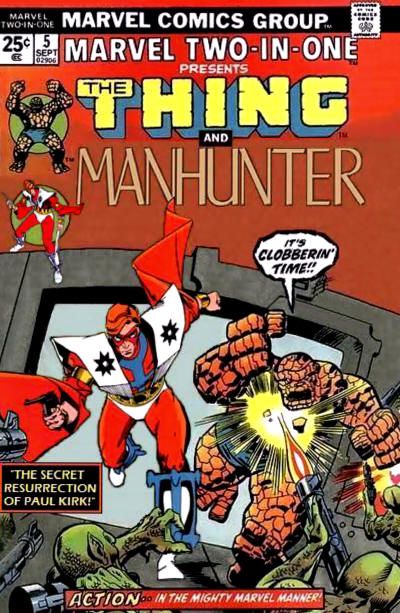


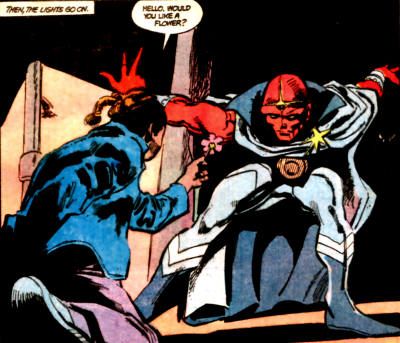
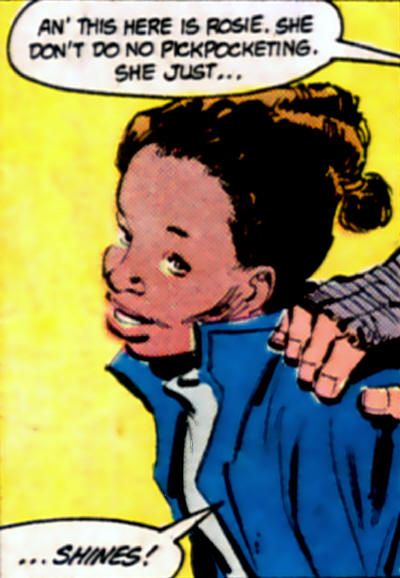
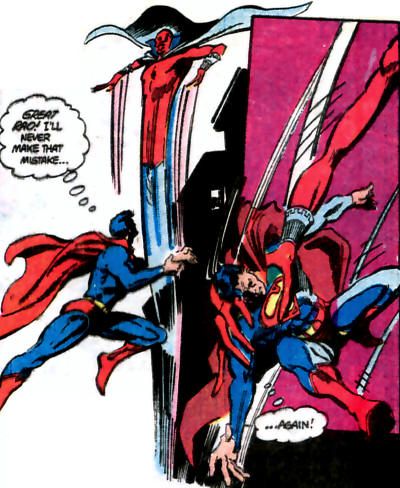
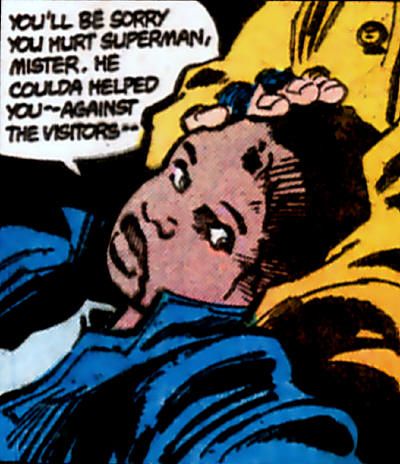




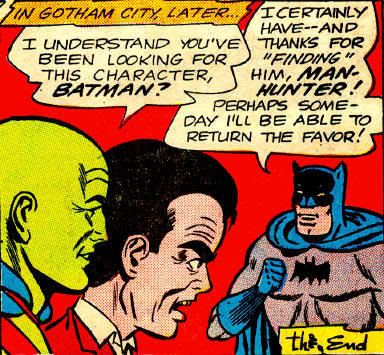 Essentially, Hugo's origin and reason for existence was tied to Gotham City. When he reappeared in a later issue of Detective Comics, these same origins were revisited. After a brief escapade in Middletown, the Martian Manhunter turned Hugo over to Batman at the end of the guest appearance. J'onn J'onzz basically acknowledged the Dark Knight's ownership of Hugo. The only reference book the character has ever appeared in was 1976's The Encyclopedia of Comic Book Heroes, Volume 1: Batman by Michael L. Fleisher, although he was minor enough to be misidentified as Professor Hugo Arnold (which was not corrected in the 2007 reprint edition.) His last appearance anywhere was a 2010 issue of DC Super Friends, where he was modeled after his first appearance and fought Superman and Aquaman.
On the other hand, the Wizard of a Thousand Menaces made three appearances in the Manhunter from Mars strip running in House of Mystery from 1965-1967. Hugo was visually revised from being squat with brown hair to tall and lean with black hair and distinctly different facial features. Despite Hugo remaining mobile, he managed to run into J'onn J'onzz in entirely separate locations, once on a different continent. Unlike Batman, Hugo actually sought out the Alien Atlas in one instance for revenge, and featured into a total of five encounters. Despite his ties to Gotham City, Hugo has had no recorded stories there since his debut. Professor Hugo was the first villain to face Martian Manhunter in a solo adventure more than once, and in fact did so four times before 1966, when the Martian's next ongoing adversary was created in the form of Mr. V. Hugo has also battled J'onzz's sidekick Zook four times more than he ever has Robin the Boy Wonder. Where Professor Hugo is an insignificant and forgotten one time Batman foil, he's one of the most memorable Martian Manhunter adversaries of the Silver Age. Which is more important, where Professor Hugo started from, or where he went afterward?
Essentially, Hugo's origin and reason for existence was tied to Gotham City. When he reappeared in a later issue of Detective Comics, these same origins were revisited. After a brief escapade in Middletown, the Martian Manhunter turned Hugo over to Batman at the end of the guest appearance. J'onn J'onzz basically acknowledged the Dark Knight's ownership of Hugo. The only reference book the character has ever appeared in was 1976's The Encyclopedia of Comic Book Heroes, Volume 1: Batman by Michael L. Fleisher, although he was minor enough to be misidentified as Professor Hugo Arnold (which was not corrected in the 2007 reprint edition.) His last appearance anywhere was a 2010 issue of DC Super Friends, where he was modeled after his first appearance and fought Superman and Aquaman.
On the other hand, the Wizard of a Thousand Menaces made three appearances in the Manhunter from Mars strip running in House of Mystery from 1965-1967. Hugo was visually revised from being squat with brown hair to tall and lean with black hair and distinctly different facial features. Despite Hugo remaining mobile, he managed to run into J'onn J'onzz in entirely separate locations, once on a different continent. Unlike Batman, Hugo actually sought out the Alien Atlas in one instance for revenge, and featured into a total of five encounters. Despite his ties to Gotham City, Hugo has had no recorded stories there since his debut. Professor Hugo was the first villain to face Martian Manhunter in a solo adventure more than once, and in fact did so four times before 1966, when the Martian's next ongoing adversary was created in the form of Mr. V. Hugo has also battled J'onzz's sidekick Zook four times more than he ever has Robin the Boy Wonder. Where Professor Hugo is an insignificant and forgotten one time Batman foil, he's one of the most memorable Martian Manhunter adversaries of the Silver Age. Which is more important, where Professor Hugo started from, or where he went afterward?
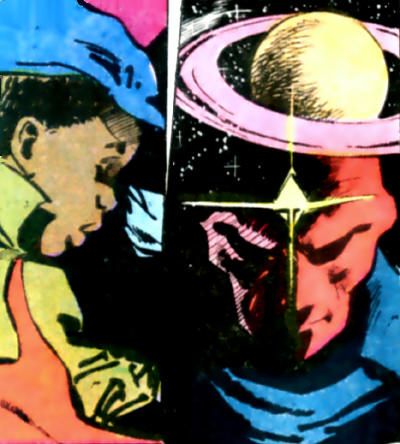



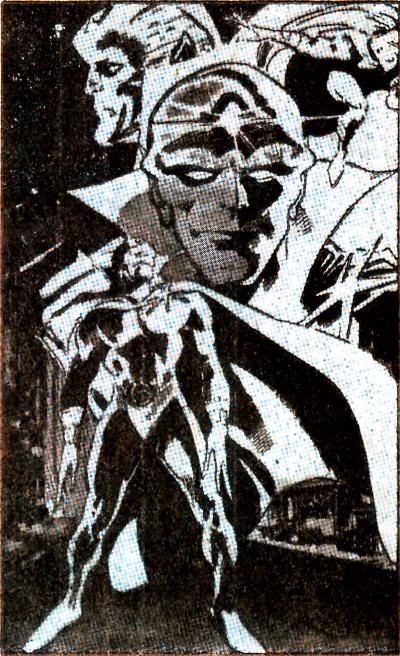
 Despero was impressed/disturbed by the fight Doctor Arthur Light gave, as he initially looked like a pushover, but stayed right up in this thing down to the end. 40% of 27 respondents wanted the guy who gave Sue Dibny surprise sex and has fought the non-powered Green Arrow more than any other single super-hero who's any damned good at all. Close call or no, we're sending him out on a dinghy.
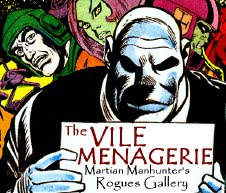
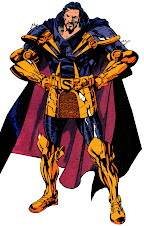
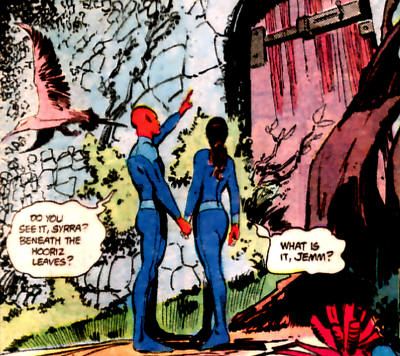
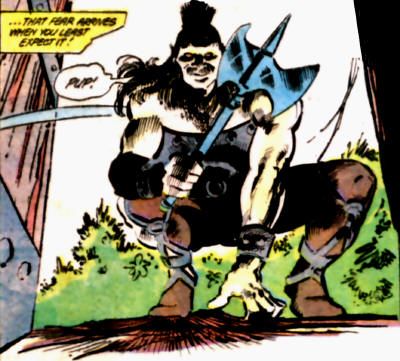
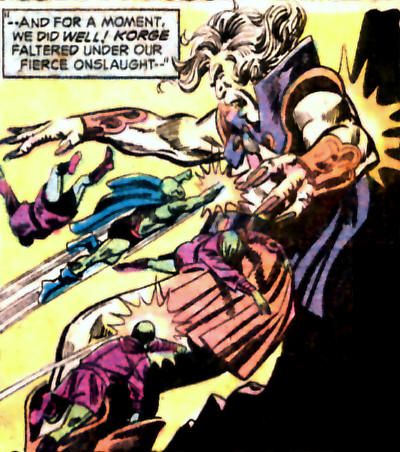
More definite results are expected from Korge, the Last Angry God of whatever that planet was in the Bronze Age that the Martian survivors settled on. In a fairly typical Martian Manhunter story from that period, J'onn J'onzz had already been preemptively defeated by the villain and gone running to his superfriends so they could fix things for him. On the plus side, rather than making J'onzz look like a tool by defeating the bad guy easily (see Commander Blanx, Re's Eda, N'or Cott*, Bel Juz, Challenger**, the Marshal and the entire surviving Martian military,) Korge actually kicked each individual ass in a JLA team. Given that powerhouses like Lobo and Doomsday have recently been voted off the island, the Vile Menagerie could use a guy with notches in his gnarled fingernails for the Flash, Green Lantern and Superman. On the other hand, the Martian Manhunter was another notch, and though he delivered the final blow in defeat Korge, it was all according to the brilliant plan of the Atom. I run an Atom blog, and the Tiny Titan desperately needs villains, but I'm not about to give him Korge. Does the Alien Atlas deserve more consideration, or is this another reach based mostly on home turf advantage?
* Whose name I've consistently added an r to for about four straight years.
** Taken out by one Green Arrow, and isn't that embarrassing?
Despero was impressed/disturbed by the fight Doctor Arthur Light gave, as he initially looked like a pushover, but stayed right up in this thing down to the end. 40% of 27 respondents wanted the guy who gave Sue Dibny surprise sex and has fought the non-powered Green Arrow more than any other single super-hero who's any damned good at all. Close call or no, we're sending him out on a dinghy.
More definite results are expected from Korge, the Last Angry God of whatever that planet was in the Bronze Age that the Martian survivors settled on. In a fairly typical Martian Manhunter story from that period, J'onn J'onzz had already been preemptively defeated by the villain and gone running to his superfriends so they could fix things for him. On the plus side, rather than making J'onzz look like a tool by defeating the bad guy easily (see Commander Blanx, Re's Eda, N'or Cott*, Bel Juz, Challenger**, the Marshal and the entire surviving Martian military,) Korge actually kicked each individual ass in a JLA team. Given that powerhouses like Lobo and Doomsday have recently been voted off the island, the Vile Menagerie could use a guy with notches in his gnarled fingernails for the Flash, Green Lantern and Superman. On the other hand, the Martian Manhunter was another notch, and though he delivered the final blow in defeat Korge, it was all according to the brilliant plan of the Atom. I run an Atom blog, and the Tiny Titan desperately needs villains, but I'm not about to give him Korge. Does the Alien Atlas deserve more consideration, or is this another reach based mostly on home turf advantage?
* Whose name I've consistently added an r to for about four straight years.
** Taken out by one Green Arrow, and isn't that embarrassing?