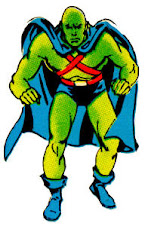
When J'onn J'onzz first arrived on Earth, he painted a picture of a utopic Mars that he longed to return to, free from war and pursuing technological advances. This notion fell into doubt within his first year of publication, as a
Martian Criminal turned up on Earth with a defective
guard belt that had liberated him from "Space-Prison." J'onzz considered leaving his fellow green-skinned Martian on Earth and using the belt to return home, but decided that he couldn't leave his recalcitrant countryman to his own devices. It's worth mentioning that like John Jones, the Criminal assumed the form of a Caucasian male.
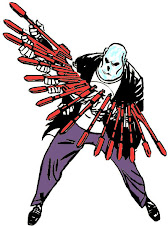
A few months later, J'onzz helped solve a series of robberies committed by Canal Raiders on his home world armed with ray guns, and a while after, fended off a
Robot Criminal from Mars who possessed the body of a white male. A
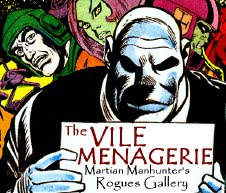
cache of Martian weapons turned up once, and bands of green-skinned hooligans occasionally dropped by from the red planet. However, all of this was handled with a sort of aplomb-- the unruly getting up to shenanigans that needed to be addressed by the Manhunter from Mars.
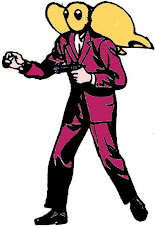
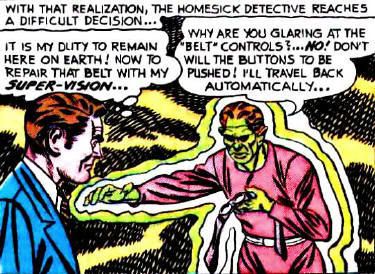 B'rett
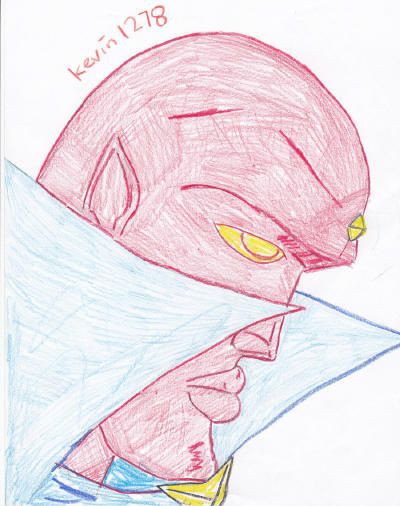
 was different. Where others fled, this fugitive had the means to kill J'onn J'onzz, and set about gunning him down. Failing that, B'rett stripped away the Martian Manhunter's ability to use his other powers while invisible by exposing him to Formula Z6. This forced J'onzz to reveal his presence on Earth in order to save the lives of some local police officers B'rett would surely have murdered otherwise. This was no vandal or smash thief, but a cold-blooded killer. B'rett was plumb evil, the first such Martian revealed to be so dire. B'rett was also the first Martian in continuity to be of a skin color other than green, and remains the only one of the highest yellow. One wonder what color B'rett might have been, had he ever assumed human form. The xanthic bandit made race an issue, and it is an issue that continues to be focal in Martian lore.
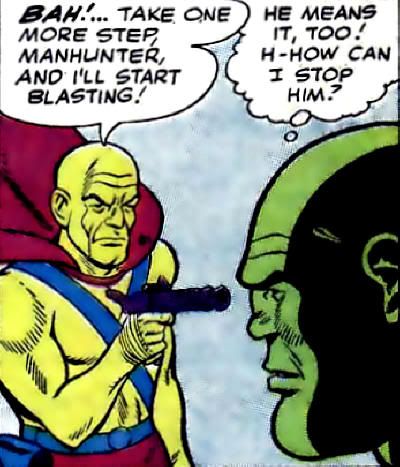
In 1969, it was revealed through retroactive continuity that the Martian Manhunter's green-skinned people were properly known as Desert Dwellers, and had been at war with white-skinned Pole Dwellers over an energy source called the
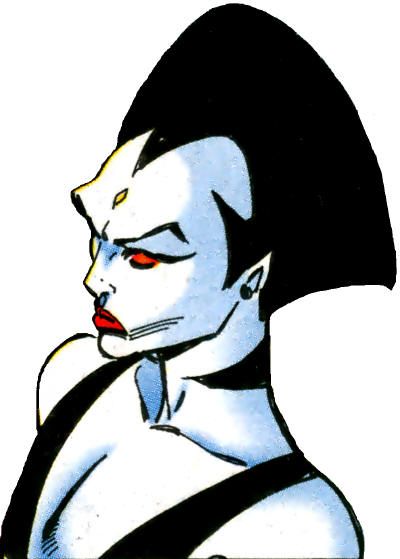
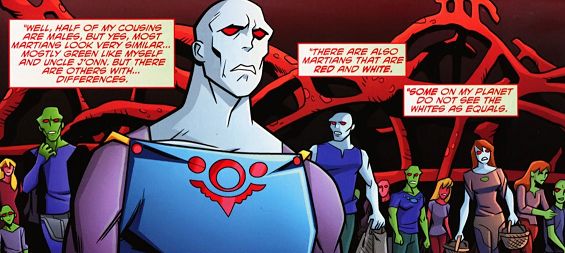
Blue Flame. The polar people were also known by the more seemingly derogatory "Pale Martians," not that there aren't negative connotations to "pole-dwelling," as well. Led by the cruel
Commander Blanx, there has to date never been a "good" Pale Martian, and those shown were either outright evil or at least fully committed to carrying out atrocious orders without question. Specifically, Blanx and his men unleashed the holocaust on Mars that wiped out most of the population and rendered the world uninhabitable. Blanx was not motivated by racial hatred, as it seems probable his own Pole Dwellers were allowed to perish, aside from his minions. Blanx committed genocide purely for profit, with the intention of selling Mars in its entirety to an unnamed buyer.
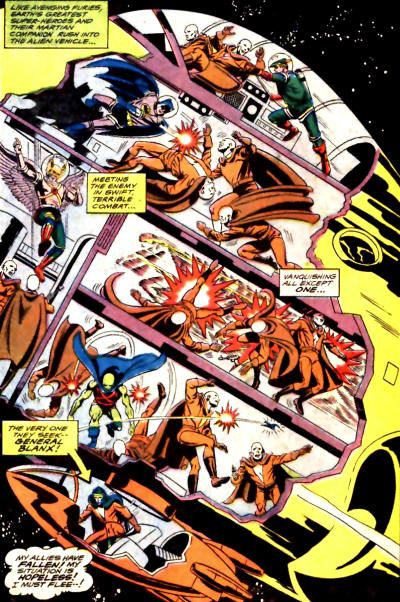
In this version of the Martian Manhunter's origin, J'onn J'onzz was ambushed, convicted of trumped-up charges by an all-Pale jury, and sent into exile. J'onzz's absence allowed Mars to die, and despite Blanx's motivations, it's hard not to see their final battle amidst the ashes of the red planet as a clash between the sole remaining representatives of two races. The Justice League of America helped round up the evil Pale Martians, and turned a blind eye to J'onzz's use of lethal force against Blanx. John Jones had been a paragon of white authority, working under a similarly hued police captain and alongside a blond haired, blue-eyed patrolwoman. Blanx was a paler shade of white though, practicing prejudice with self-interest of the sort that the Love Generation was loudly condemning at the time. I suppose this was the beginning of J'onn J'onzz as Israelite, as Native American, as last chief of a race largely wiped from the cosmos.
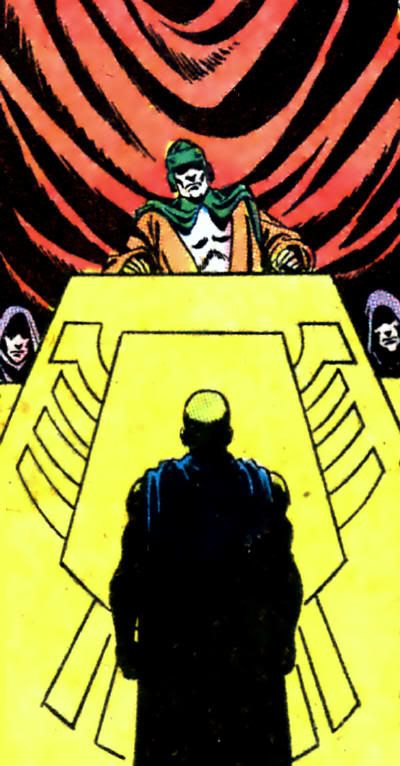
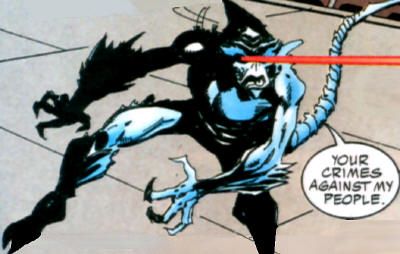
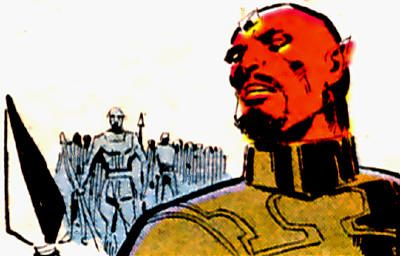
In a story from 1977, a friend of J'onn J'onzz appeared to be assassinated on the alien world Mars' survivors settled on. Rather than make the obvious assumption that one Desert-Dweller had killed another, J'onzz leapt to the wildly inaccurate conclusion that it must have been one of the super-heroes on Earth who knew of Mars II's location. Bad plotting and a desire to use a lot of guest stars surely played into his logic, but one has to wonder if it was just easier to blame another species instead of looking to his own people for the guilty parties, which is exactly where they were eventually found. The "assassination" turned out to be a misdirection to push a Desert Dweller army into massacring a blue-skinned people who inhabited the planet and seizing their superior city. Not a progressive sounding bunch, these Desert Dwellers. A similar ruse was used in 1984 to launch a war against the Earth, which the Martian Manhunter helped route. However, there was a good deal of distrust between the Alien Atlas and his former allies in the Justice League, likely fueled by J'onzz's tendency to run around battering people and making insane allegations against them. There was a lot of tension revolving around people's relative "Martianness," and J'onzz was ultimately abandoned by his people as they left Earth in shame.
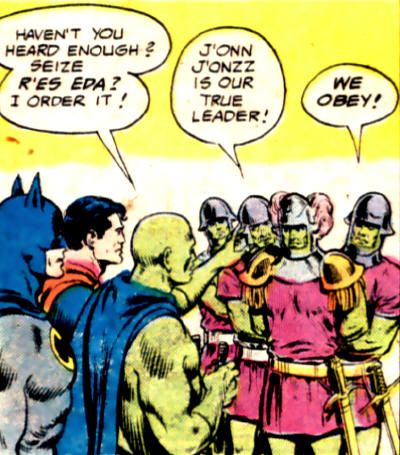
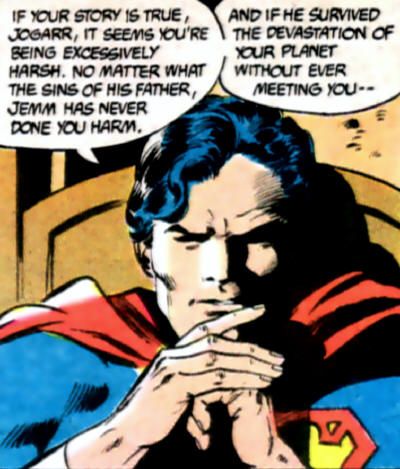
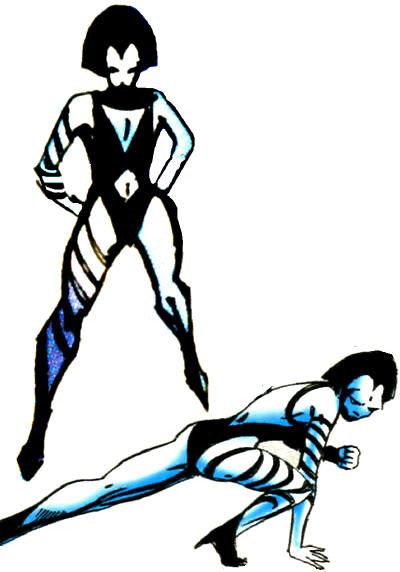
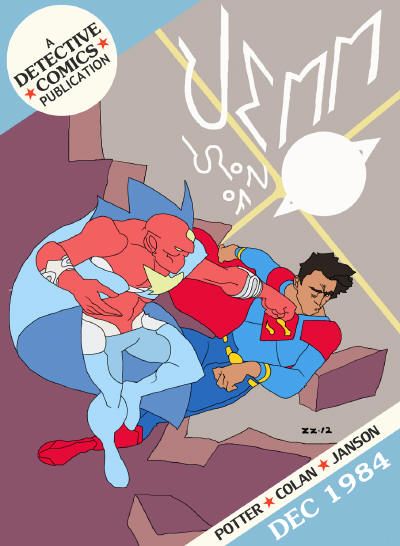
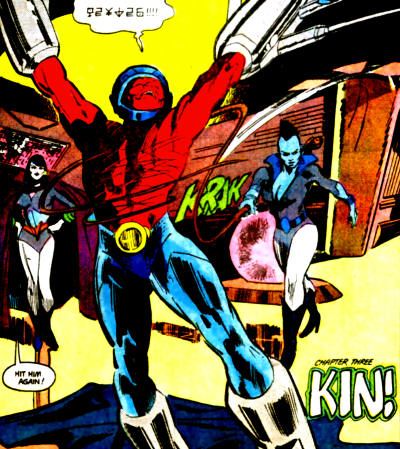
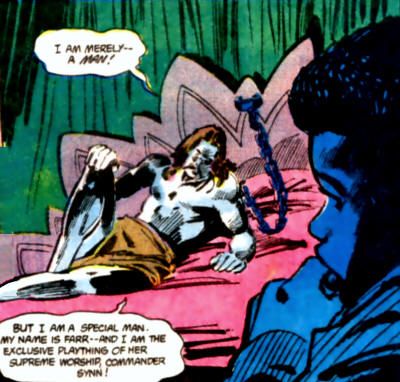
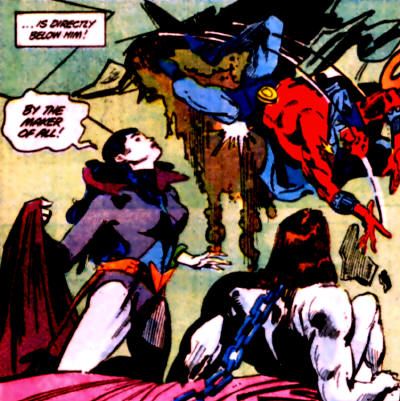
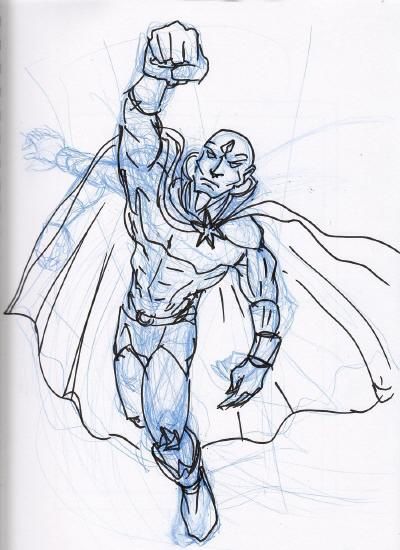
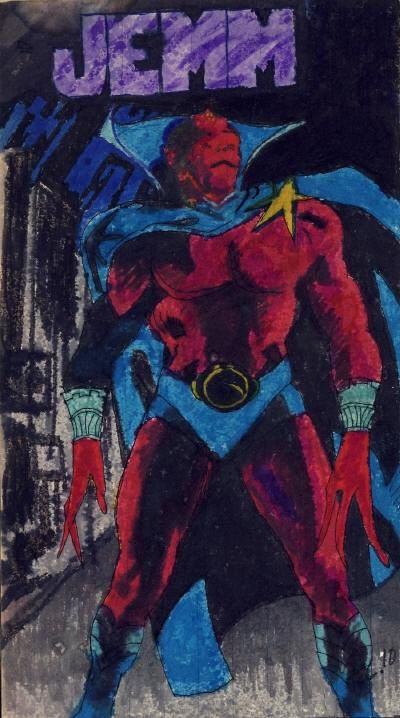
In 1984, a cousin for J'onn J'onzz was created in "Jemm, Son of Mars," whose self-titled mini-series made ample use of the previously mentioned Bronze Age history of Mars. An editorial clash saw Jemm shift setting to Saturn, but the core story remained the same. White-skinned Saturnians were still sociopaths, while Red Saturnians were warmongers who feared and loathed them. Saturnians added some rather unhealthy sexual prejudices as well, with misandrist White females enslaving weaker men. A later retcon reunited the Saturnians with Mars, making Saturns' races cloned colonists of Mars, Red for Green, White for White. The typically pacifistic Jemm has been repeatedly manipulated into conflict with J'Onn J'Onzz, who was mostly understanding about the matter, although he did decide to have intimacies with Jemm's fiancé. The Saturnians defer the Martians as superior beings, which J'Onzz also took advantage of rather than dissuading.
From around 1985 until 1996, the Martian Manhunter was treated as being essentially the only Martian. In 1988, all Martians appearing in earlier stories were revealed to be figments of J'onzz's imagination planted by a psychic suggestion to deal with the trauma of living through a destructive plague. J'onzz learned that he had a wife and child, both of whom had green skin. Previously, the only two females linked to J'onzz in a romantic capacity had also been green-skinned.
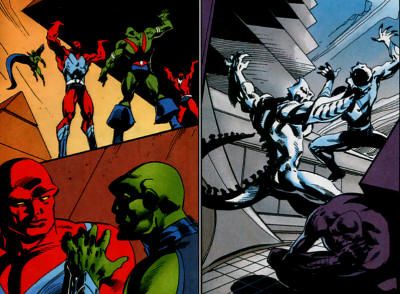
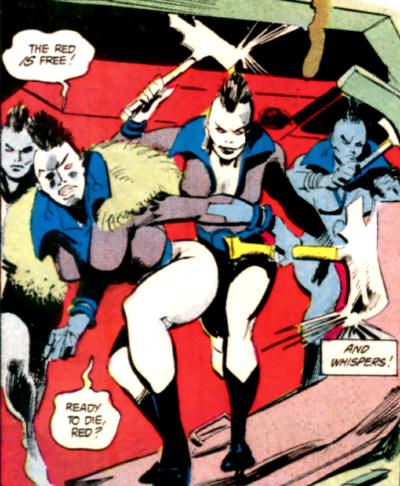
In 1997, the old racial war was revisited with a vengeance, as monstrous White Martians were introduced and made a bid for Earth. Besides being bestial in form, the White Martians were portrayed as universally racist, sadistic, and generally amoral. The one exception, introduced nearly a decade later, was the heroine Miss Martian. M'gann M'orzz chose to a appear as a Green Martian because of the broad hatred of her people, and has continued this charade for years, despite her true race being known. While a "good" White, a future version of M'orzz revealed that she would eventually embrace her race and vicious White leanings. Miss Martian did not care to hear this, and chopped off her future self's head before indulging in an identity crisis with signs of emerging schizophrenia.
J'Onn J'Onzz had spent years mourning the absence of his people, but that did not stop him from mind-wiping the White Martians, imprisoning them, and merging temporarily with an entity called Fernus in a bid to exterminate them. In the "One Year Later" period, J'Onn turned against the Justice League to protect a group of murderous Green Martians, until he found out that they were really White, and they were never heard from again. J'Onzz also waited years before having any sort of direct contact with M'gann M'orzz, and has largely maintained that distance. Only in the non-canon cartoon
Young Justice has there been a portrayal of genuine sustained warmth between the two, although Miss Martian appears to be a Green Martian and niece to J'Onzz in that series.
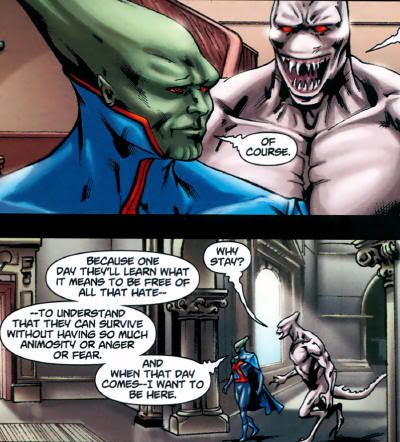
What we have here is a failure to communicate a positive direction for racial politics in the Martian Manhunter's neck of the woods. All White Martians are pure evil, aside from a couple of "good ones." All Pale Martians were Nazi goons, while White Saturnians were all kinds of creepy messed up. Red Saturnians weren't much better, just weaker, and most Green Martians were either massacre bait or knee-jerk violent reactionaries. The one yellow-skinned Martian was a killer outlaw, and J'Onn J'Onzz hasn't had a healthy relationship with any of them since 1968. J'Onzz did deign to have a fling with the White Saturnian
Princess Cha'rissa, which had built-in terminating complications, not the least of which was J'Onzz being a "Maker" dallying with the descendant of a slave to his enemy race. There was also the young demi-human bad girl Scorch, which fairly screamed of a midlife crisis on J'Onn's part. Much less skeevy was a doomed romance with the African/Native American descendant
Kishana Lewis.
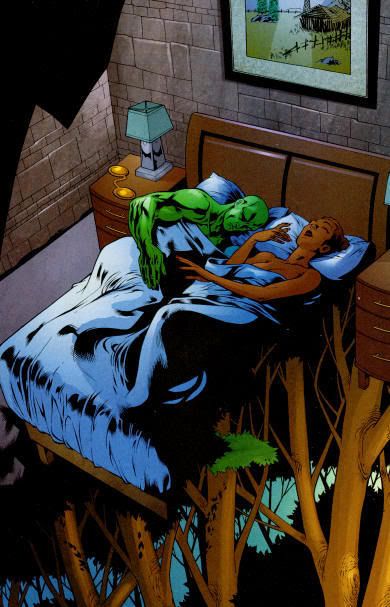
When J'onn J'onzz first took human form in 1955, it was as a white man. When he killed off the John Jones identity in the early '60s, he eventually took on the role of Marco Xavier, another white man. After decades away from Earth, upon repatriating here, he reestablished the deceased John Jones identity while serving on a calculatedly multicultural team. It wasn't until the late '90s that creators flirted with other races or genders, none sticking for long. In animation and live action, African-American actors have tended to portray the Martian Manhunter, the 2012 direct-to-DVD cartoon
Justice League Doom introduced a black John Jones, and New 52 DC Comics may follow suit. While I've tended to be critical of DC's dumping decades of continuity in an attention grab, J'Onn J'Onzz could benefit mightily from this new beginning. There were numerous isolated pockets of continuity in any given decade of publishing that rarely connected as any kind of whole, and the stuff that did carry over was often naive demonizing along racial lines. I sincerely hope that when we do finally get to know the Manhunter from Mars in the New 52, someone will have given thought to the greater scheme of Martian history, and will offer a more nuanced approach to the races of the red planet.
Post-Racial DC Comics?







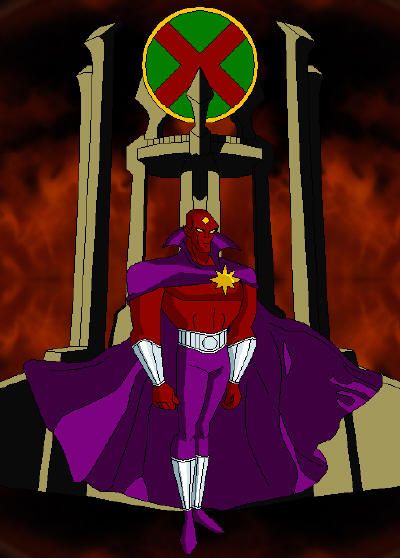 N:TAS DCU: Z'Onn Z'Orr: Santurian 9-6-11

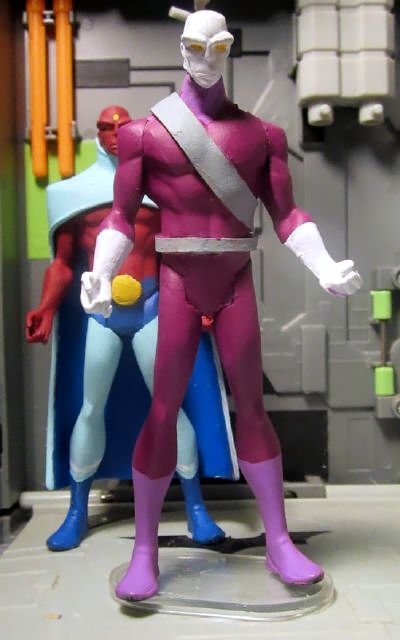
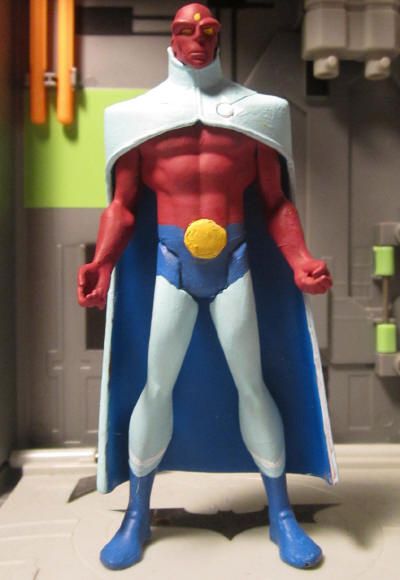
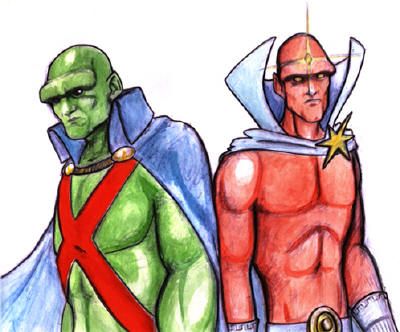 Click To Enlarge
 Click To Enlarge
 Click To Enlarge
 Click To Enlarge