Showing posts with label Imaginary Stories. Show all posts
Thursday, September 18, 2025
JLX #1 (April, 1996)
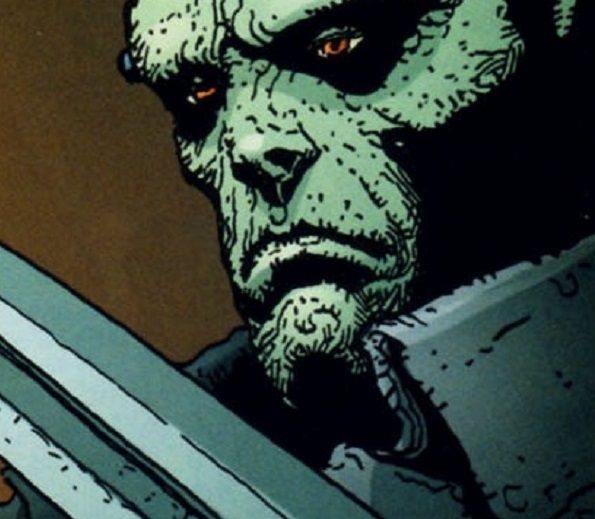
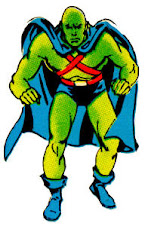
In my write-up for Amazon #1 (April, 1996), I went into a lot of detail about how the Amalgam Comics characters were not always, or even often, equally divided portions of two characters combined. Mister X is a perfect example of this, because he's almost wholly the Martian Manhunter, but combined with... stuff. The simplest equation is J'Onn J'Onzz + Professor X, which is truer of the sequel comic, 1997's JLX Unleashed #1, but still not. You see, Charles Xavier already had a much more important role in the Amalgam Comics scheme, Doctor StrangeFate. Marco Xavier is the X in Mr. X, and aside from shopping at The North Face over Turnbull & Asser, he was lifted whole from 1960s House of Mystery Manhunter strips. When the Amalgam story compels Mister X to reveal his true form, he's simply the Martian Manhunter with a big "M" stenciled over his right eye and down his face. That would indicate the X-Man Bishop, but he didn't turn up until a sequel mini-series where he was amalgamated with Superman. In several Marvel Comics parallel futures, mutants are branded in this same manner, although Mister X is explicitly not a mutant himself.
We have to look to the manufactured JLX letters column to get the real skinny. It notes, "When the rebel Skrull were driven from Mars by the Kree, one lone survivor fled to Earth. Any chance he could be the missing link to mutantkind's origin?" That doesn't entirely track with the narrative, but that skrull's role is confirmed by the book's editor. "And speaking of mysterious guys, what's the deal with this Mr. X? For years over in SLEUTH COMICS, he's been shown to be a ruthless power broker and master crook, but now he's the mutant's benefactor? Something weird has got to be up with that creep!" It doesn't sound like a villainous Mr. X would be starring in his own strip, so who exactly was he clashing with in the phony title? Was it like in House of Mystery where J'Onn J'Onzz and Marco Xavier turned out to be each other's own enemy, and if so, why wasn't that also referenced? Was Marco Xavier someone whose identity the alien replaced, or was it a construct that was always working toward the alien's interests. If this is all still mostly Manhunter from Mars myth, when does the Marvel come in?
Like Storm is Wonder Woman, there probably isn't a specific character that forms an amalgam with the Martian Marvel. Super-Skrull is the most well known member of the Marvel Comics shapeshifting alien race, but the only power that he possesses that the Alien Atlas doesn't is the ability to manifest and ensconce himself in fire. Now, most Skrulls just change their form, without the invisibility, elasticity, telekinesis, super-strength, or human torching. That last one is pretty key, and also, Mister X doesn't seem to have any of the personality or personal animosities of Super-Skrull. There are other Skrulls with exceptional powers, but are so obscure that they wouldn't rate an amalgamation with a Magnificent 7 member. Sadly, the Amalgam J'Onn J'Onzz is probably just Skymax, also known as the Skrullian Skymaster, who comes from the same parallel reality as the Squadron Supreme. Yes, Martian Manhunter rates so little consideration that they just made him the analogue of himself from the knock-off Justice League.
I've devoted so much space to the Mister X mystery (or lack thereof) because JLX #1 is mostly a plotless slugfest peppered with false continuity relations that I spelled out in JLX in The Amalgam Age of Comics: The DC Comics Collection (1996). The New Blood mutant members of the Amalgam JLA break their framed fellow Mariner out of jail, and the core Judgment League Avengers pursue them in the opening splash of the one-shot. It spoils the comic, frankly. Captain Marvel especially looks so good that I want to read the adventures of the JLA, not their genejoke off-shoot. As with Mister X, the JLX characters are largely bereft of any imagination or effort. Firebird and Mercury at least look like their DC counterparts, but everyone else appears (and more importantly acts) like the X-Men, in a story that reads like an X-Men comic. Mister X functions like Professor X, relying on his telepathy to communicate with and command his JLX. One nice swerve is that the combination of The Angel and Hawkman has been hiding his mutant status from the JLA, but Mr. X blackmails him into throwing a fight to give the JLX an advantage. They use the distraction to escape to Poseidonis in a leaky sub, where they are confronted by Will Magnus and his Sentinels. In that undersea battle, Rogue-but-brunette is nearly crushed to death, and Mister X has to assume his Skrull form to save her.
The alien has been revealed to friend and foe alike. He explains, "I am J'Onn J'Onzz. I am the last survivor of the Martian race known as... The Skrull. I have been hiding on your world for years with the aid of my shape-shifting powers. I know what it's like to be an outcast... alone. When I learned of mutants and their persecution, I saw a wrong that needed to be righted. And, too... I saw a community, one that might be mine... a place I might belong... at last." Not-Cyclops questioned why a non-mutant should lead the team, but Substitute-Mariner called out the bigotry and welcomed the help. Mister X's commitment to finding the lost birthplace of mutants probably didn't hurt. "Somewhere in this city there must rest the secrets of why the Atlanteans departed... and where they've gone. Follow me, and I will do all I can to help you find them."
"A League of Their Own" was written by Gerard Jones and Mark Waid, drawn by Howard Porter and John Dell. The disgraced Martian Manhunter: American Secrets was less than half a year away from getting the 1987 volume of Justice League America cancelled. He actually wrote several Amalgam Comics, despite being very near the end of his mainstream comics career, and having had the entire Green Lantern line taken from him. It really makes you question how much the Big Two were invested in the Amalgam books. Mark Waid helped Jones on most of his books, and was five months out from co-writing Justice League: A Midsummer's Nightmare, the book that made me build this blog. He would also often fill in for Grant Morrison on the relaunched JLA, and Waid eventually succeeded him on that title. Porter & Dell were the artists on that blockbuster success, which takes me back to that JLA splash page. JLX was one of the more popular and better selling Amalgam Comics, on the same glossy stock with similar coloring as JLA. Whether this was a trial run on what DC was planning for the future, or the template upon which it was built, it seems to me JLX was a harbinger in ways (even the abbreviated title) no one could have expected (and few seem to recognize today.) This is a literal pivot point from the creators and characters that were failing the franchise to those that would define it as a powerhouse property for the world in the coming months. That splash represented the book that I wanted to read, and would get to in 1997.
Thursday, September 11, 2025
JLX in The Amalgam Age of Comics: The DC Comics Collection (1996)
The plan for yesterday was to draft a larger post on the background of the Amalgam Comics stunt, halve that as appropriate, and then spin off narratives for the Wonder Woman titles and Martian Manhunter in JLX. What I hadn't considered was that Wonder Woman was far more central to the Marvel Versus DC event, and had more expansive lore within the Amalgam Comics pseudo-verse, meaning her side of the story dominated so fully that I simply ran out of time and energy to give a Martian perspective. There's an additional, anniversary-appropriate irony... I apparently never covered DC Versus Marvel on this Blogspot/Blogger/Google incarnation, only my oft-referenced-during-anniversaries WebTV incarnation from the late '90s / early '00s. What a reminder that I've been doing this too long, that I assume the presence of my DC Message Boards-era, 20th Century content here. One of the running jokes was that I was supposed to migrate all that WebTV content here and save myself work, instead of re-doing... well... clearly not everything. I wonder if I can even still run the CD a buddy burned to back the site up using a web crawler in 2000? Anyway, I'm not inclined to repeat myself, so if you want background, read it at Diana Prince as the New Wonder Woman.
While there are some notable characters dating back to the (falsified) Golden Age of Comics like Super-Soldier and Diana Prince, Amalgam Comics seems largely built on a (retconned) Silver Age. Super-Soldier (human Clark Kent given powers from materials found by scientists in a Kryptonian rocket) was put on ice until modern times, awakening to find his powers diminished by lingering radiation from Lex Luthor's K-bombs. In order to combat superhuman menaces, Kent put together a team that would counter them "without alliances to a particular country or political group." This team would be the Judgment League Avengers, or "JLA" for short. They consisted of Dark Claw, Captain Marvel, Angelhawk, Canary, Goliath, and Hawkeye. Their sometimes ally was Mariner, a combination of Namor and Aquaman who lived in the undersea city of Poseidonis with his wife and child. Poseidonis was mysteriously destroyed, taking everyone by Mariner in a cataclysm. The mourning Mariner launched two mission: to combat pollution to his water by the surface world, and to find the lost city of Homo Superior, Atlantis.
Mutants are present in Amalgam Comics, but seem to be more marginalized there than at Marvel. Even the JLA are somewhat discriminatory towards them, with members hiding their mutant genes from fellow heroes. However, the JLA also battle anti-mutant bigots like Will Magnus, who used his technological genius to build mutant-hunting robots called Sentinels. Will Magnus was motivated by his hatred of his brother Erik, who in the guise of Magneto formed The Brotherhood of Mutants. Will Magnus also created more humanoid automatons, like the Setinel Jocasta, who he tested by having her infiltrate the modeling industry under the name Millie. At one point, Will Magnus tried to infiltrate the JLA with a synthezoid spy called Crimson Whirlwind, but creation was turned against creator. Another mutant group was X-Patrol, led by a time-traveler from an apocalyptic future named Niles Cable. They are attempting to improve the fate of their kind, with each successful mission changing the history of Cable.
In the series JLA: The New Blood, the Avengers started to address the rising visibility of mutants by adopting more out members to the team. Among the earliest mentees were Firebird (The Green Flame + Phoenix,) Apollo (The Ray + Cyclops,) and Wraith (Obsidian + Gambit.) They were soon joined by Mercury (Impulse + Quicksilver,) Runaway (Gypsy + Rogue,) and Nightcreeper (The Creeper + Nightcrawler.) Among their enemies and frienemies were Lord Nimrod and his X-tremists, Ms. Tique's Brotherhood of Injustice, Sunstorm, and Metamimic, while a rival JLA spin-off group was Extreme Works. I'm not clear on their relationship to The Brotherhood of Mutants, but that team was murdered by Sentinels. Recently, the members were reborn in robot form as Magneto and the Magnetic Men.
Most recently, Mariner was framed for a mass murder, and the U.S. Government ordered his capture and imprisonment without trial. This created a rift between the Judgment League Avengers and their mutant new blood, who under the guidance of the notorious criminal mastermind Mr. X, orchestrated a jailbreak for Mariner with the renegade "JLX."
Labels:
1990s,
Gypsy,
Imaginary Stories,
JLA,
Marco Xavier,
Martian Manhunter,
Merchandise
Monday, November 11, 2024
Superman: Space Age (2022-2023)
Clark Kent's rocket from Krypton landed in Smallville, Kansas a bit later than in real life, offering a late teen debut of Superman in 1963 as part of an atomic age second act of the Cuban Missile Crisis. As with David Goyer's cinematic take, Pa Kent is averse to his son using his powers in any way, much less ever leaving home to do so, and warns him about unintended consequences with the story of his accidental wartime killing of a child. The flying farmboy in overalls nonetheless inserts himself into a moment of geopolitical panic that's ultimately responsible for the fiery death of the citizens of Coast City, California. Cue a rapper monotonously and repetitively intoning "this is the remix."
Clark Kent stumbled upon the Fortress of Solitude and begins training to become Superman, plagued by imposter syndrome over the recent circumstances, and his failure to live up to the hologram of Jor-El's minimum expectations of his child's development. The following year, Clark moved to Metropolis, where he took over Lois Lane's old "kooks" beat after she leveled-up to full reporter. It was here that he met Pariah ("this is the remix, uh-huh uh-huh") and was given a prediction of multiversal doom that will hang over the entire mini-series. Elsewhere, Bruce Wayne further develops a rejected pitch to the military into his Batman arsenal, jet fighter Hal Jordan downs Abin Sur's starcraft, and Lois Lane investigates the great events of the times, including the story highlight of spending time in jail with the Freedom Riders. Lex Luthor creates another missile crisis so that he can rule over the ashes, but is captured by Batman, and the actual nukes are redirected by the arrival of Superman. The characterizations mostly fit the Tom Mankiewicz mold, so you'd be forgiven for hearing the voices of Reeve, Kidder, Cooper, Beatty, and especially Gene Hackman while reading. The outliers are at Wayne Manor, as you'd more rightly hear Sam Hamm as read by Keaton and Gough, including the complete absence of a Robin. A month later, Wonder Woman is dropped into the U.N. to state the need for Amazonian intervention in any future crisis, and joins Green Lantern and the World's Finest at the new Hall of Justice. You can use whatever voice you want to while reading Princess Diana, because she's little more than an obligatory visual presence throughout this story.
Book Two leaps to 1972, and concerns itself with the impotence of colorful heroes maintaining the status quo in troubled times, within a story that is itself almost entirely bereft of non-whites, aside from stereotypical pimp and hos in the opening sequence. Maxwell Lord ("uh-huh uh-huh") takes over Wayne Enterprises, and runs it with such sociopathic criminality that Batman has to burn it all down in the end. Despite being the liberal voice of the Justice League of America for a generation, the appearance of Green Arrow, along with Aquaman, is purely token-- leaving the handwringing to the Dark Knight and Man of Steel. The Flash gets more attention, but in an already media-indebted work, painfully takes his cues from Ezra Miller's atypical ADHD neurotic. Clark Kent drops the ball on Watergate and is scooped by Lois Lane, who is constantly reinforced as his professional and moral superior. Kent does make a big show of finally acknowledging this, seemingly unlocking Lois' chastity as they finally embrace romantically, then marry, then procreate. It's a remarkably conservative trajectory, even for a Superman comic. The back third of this edition of an exceeding long trilogy of self-important 80-page tomes dispenses with the social concerns in favor of a lengthy Brainiac battle that sets the stakes of a final reckoning with the Crisis, along with the abrupt demise of Hal Jordan. Again though, nobody in this book really matters except Clark, Lois, and Bruce.
As with the Zack Snyder Murderverse, I'm more put out by the late inclusion of the Martian Manhunter than I would have been his total omission. It's explained by a contrivance of the story that no aliens are publicly known before the arrival of Brainiac, except Superman, and also readers saw Abin Sur and the Jor-El hologram, but whatever. He is joined by Green Lantern John Stewart, the Hawks, Black Canary (previously at Jordan's funeral,) Red Tornado, the Atom, and... Swamp Thing?!? Stewart gets the job of a Guardians of the Universe-informed exposition dump on the Anti-Monitor, and the insermountable Crisis coming in its wake. This is furthered by a multiverse of Brainiacs trying to recruit a multiverse of Superman...ses... after destroying their individual Earths for... natural resources, or something? It's a dumb play for such a bunch of... you know. In another straight lift from multimedia, Superman is girded into expanded action by the death of his terrestrial father by heart attack. Superman decides 19 years into the narrative to finally embrace hologram Jor-El and his inherited intellect to... take a few years off to master the human genome so that he can analyze every living being to create a pill that cures whatever ails them? It's ahh-- rather convenient-- and continues the telegraphing of the final resolution begun with one particular multiversal Superman at the top of Book Three.
In a nauseating turn that I'm thankful I read before the election, an Alan Dershowitz stand-in exonerates Lex Luthor for mass murder, allowing him to rebuild LexCorp, undermine Superman, and hire a rather Ledger Joker (complete with a Moore-biting origin story) to kill Batman... in an exhaustingly overlong tangent within an already tediously overwritten yet undercooked work that took me seeming ages to finish in one sitting... in a hospital waiting room, to boot. Trust that I was looking for a good distraction here. I had other books with me, but this thing ate up all the hours available for reading. Plus, the whole thing is just a set-up for a gag where Luthor claims victory just as the Crisis begins in earnest and he's forgotten entirely. Whomp-whomp. Here's hoping life imitates art. All I want for Christmas is a Big Mac-fueled coronary.
In a totally unobtrusive sequence where Allred definitely does not draw himself, friends, and family in as bystanders, most of the Earth perishes in lava as the planet breaks into pieces. For once, we don't actually see J'onn J'onzz die by fire, though he almost certainly burns. Just to twist the knife, Swamp Thing uses his stretching powers to save people in the final panel to bother with the props that were the JLA in this tale. Everyone dies, but Superman made a crystal that he stuffs through a hole in the multiverse made by the Brainiacs to land on an Earth where only a Superman survives. He uses it to repopulate everyone from the Space Age Earth as clones, including Lois and Jon Kent, who wonder why he made a golden statue in honor of himself. "That's not me, " the other Superman explains to extras from the forgotten 2005 Michael Bay thriller The Island. The End. So now you can't ask "Whatever Happened To...?" And I believe that I used every available Manhunter image in this blog post.
"Space Age" was by Mark Russell & Michael Allred, credits I copied & pasted from Mike's Amazing World of Comics, who it pleased me to realize was still with us long enough to catalog the book. I haven't had much experience with the writer, but was bowled over by his Superman meets Jesus Christ series Second Coming, which left me on the lookout for more. The artist I've enjoyed since buying the original Tundra Madman #1 in 1992, although I've mostly admired from afar.
Superman was one of my first super-heroes, as would be common for children "From the Thirties to the Seventies." Among my earliest exposures was the Superman #1 Treasury Edition, reprinting the initial Siegel & Shuster stories, so my perspective on the character may be a bit different from most. I don't think the Superman comics of my childhood were very good, and while my key periods of faithful reading were 1987-88 & 1993, I don't hold that material particularly dear. As a fan and retailer, I kept up with the Triangle Number period through heavy skimming and odd reads until it ended, and have dipped in from time to time, but ultimately firmly rejected the Post-Crisis interpretation of the character that persists to this day. My taste in Superman is informed less by the comic stories that I've read and more by the idea of him-- heavily informed by the Donner films, the Animated Series, and references/second hand recollections. I like the Kryptonian Superman-- the one who is more Kal-El than Clark Kent-- as seen in the Golden and Silver Age comics. On pure concept, as metaphor, and at the peak of popular cultural relevance, give me the 1950s Weisinger Man of Tomorrow. I think the further he's drifted from that ideal, with an ever greater corruption by acolytes of Stan Lee's heroes with feet of clay, the less Superman has had to say in distinction from any other idiot that wears their underwear on the outside. It's right there in the "Man of Steel" moniker that the emphasis should be on the super, man!
Russell struck me as a big idea type, and Allred loves playing in a groovy oddball mid-century space, so I really thought that this mini-series would finally serve me the alien intellectual Superman that I've been longing for. There is a little bit of that, mostly toward the end, but it slipped my mind that one of Allred's biggest influences was the foundational Spider-Man artist Steve Ditko, and that Russell's overt humanism lent itself more to Denny O'Neil than Otto Binder. I was crushingly disappointed to realize that Space Age was pretty much the exact opposite of what I'd hoped for, and would trod well worn deconstructionist ground. Thanks to its setting and style, it strongly recalls Darwyn Cooke's The Final Frontier, but undermines its heroes and exposes the underbelly of the nation instead of celebrating the progress made in that era. I now understand that the relatively muted response to this piece is probably because it's so similar to and so pale against other efforts. It was sort of a Justice League story with no interest in the team, a Superman story that gave most of the victories to Lois Lane or Batman, aimed for profundity with bumper sticker platitudes, was a Bronze Age Marvel story with Silver Age DC characters, used the fall of Camelot as an arch and unnecessary allegory for modern sociopolitical concerns, and was a comic book largely dependent on characterization from outside media, reading like pro-fic pitched directly at Walter Hamada's Warner Brothers. But most importantly, as with Snyder, it fundamentally misunderstands the icons it toys with, and the nature of their metafiction. Laura Allred's colors are a beauty to behold on her husband's delightful pencils, but it's all in service to a story that I hold in contempt, and was such a chore to get through that I'll only ever take it off my bookshelf to look at, never again to be read. What I don't need in this moment is a downer yarn about the Superman that failed.
Clark Kent stumbled upon the Fortress of Solitude and begins training to become Superman, plagued by imposter syndrome over the recent circumstances, and his failure to live up to the hologram of Jor-El's minimum expectations of his child's development. The following year, Clark moved to Metropolis, where he took over Lois Lane's old "kooks" beat after she leveled-up to full reporter. It was here that he met Pariah ("this is the remix, uh-huh uh-huh") and was given a prediction of multiversal doom that will hang over the entire mini-series. Elsewhere, Bruce Wayne further develops a rejected pitch to the military into his Batman arsenal, jet fighter Hal Jordan downs Abin Sur's starcraft, and Lois Lane investigates the great events of the times, including the story highlight of spending time in jail with the Freedom Riders. Lex Luthor creates another missile crisis so that he can rule over the ashes, but is captured by Batman, and the actual nukes are redirected by the arrival of Superman. The characterizations mostly fit the Tom Mankiewicz mold, so you'd be forgiven for hearing the voices of Reeve, Kidder, Cooper, Beatty, and especially Gene Hackman while reading. The outliers are at Wayne Manor, as you'd more rightly hear Sam Hamm as read by Keaton and Gough, including the complete absence of a Robin. A month later, Wonder Woman is dropped into the U.N. to state the need for Amazonian intervention in any future crisis, and joins Green Lantern and the World's Finest at the new Hall of Justice. You can use whatever voice you want to while reading Princess Diana, because she's little more than an obligatory visual presence throughout this story.
Book Two leaps to 1972, and concerns itself with the impotence of colorful heroes maintaining the status quo in troubled times, within a story that is itself almost entirely bereft of non-whites, aside from stereotypical pimp and hos in the opening sequence. Maxwell Lord ("uh-huh uh-huh") takes over Wayne Enterprises, and runs it with such sociopathic criminality that Batman has to burn it all down in the end. Despite being the liberal voice of the Justice League of America for a generation, the appearance of Green Arrow, along with Aquaman, is purely token-- leaving the handwringing to the Dark Knight and Man of Steel. The Flash gets more attention, but in an already media-indebted work, painfully takes his cues from Ezra Miller's atypical ADHD neurotic. Clark Kent drops the ball on Watergate and is scooped by Lois Lane, who is constantly reinforced as his professional and moral superior. Kent does make a big show of finally acknowledging this, seemingly unlocking Lois' chastity as they finally embrace romantically, then marry, then procreate. It's a remarkably conservative trajectory, even for a Superman comic. The back third of this edition of an exceeding long trilogy of self-important 80-page tomes dispenses with the social concerns in favor of a lengthy Brainiac battle that sets the stakes of a final reckoning with the Crisis, along with the abrupt demise of Hal Jordan. Again though, nobody in this book really matters except Clark, Lois, and Bruce.
As with the Zack Snyder Murderverse, I'm more put out by the late inclusion of the Martian Manhunter than I would have been his total omission. It's explained by a contrivance of the story that no aliens are publicly known before the arrival of Brainiac, except Superman, and also readers saw Abin Sur and the Jor-El hologram, but whatever. He is joined by Green Lantern John Stewart, the Hawks, Black Canary (previously at Jordan's funeral,) Red Tornado, the Atom, and... Swamp Thing?!? Stewart gets the job of a Guardians of the Universe-informed exposition dump on the Anti-Monitor, and the insermountable Crisis coming in its wake. This is furthered by a multiverse of Brainiacs trying to recruit a multiverse of Superman...ses... after destroying their individual Earths for... natural resources, or something? It's a dumb play for such a bunch of... you know. In another straight lift from multimedia, Superman is girded into expanded action by the death of his terrestrial father by heart attack. Superman decides 19 years into the narrative to finally embrace hologram Jor-El and his inherited intellect to... take a few years off to master the human genome so that he can analyze every living being to create a pill that cures whatever ails them? It's ahh-- rather convenient-- and continues the telegraphing of the final resolution begun with one particular multiversal Superman at the top of Book Three.
In a nauseating turn that I'm thankful I read before the election, an Alan Dershowitz stand-in exonerates Lex Luthor for mass murder, allowing him to rebuild LexCorp, undermine Superman, and hire a rather Ledger Joker (complete with a Moore-biting origin story) to kill Batman... in an exhaustingly overlong tangent within an already tediously overwritten yet undercooked work that took me seeming ages to finish in one sitting... in a hospital waiting room, to boot. Trust that I was looking for a good distraction here. I had other books with me, but this thing ate up all the hours available for reading. Plus, the whole thing is just a set-up for a gag where Luthor claims victory just as the Crisis begins in earnest and he's forgotten entirely. Whomp-whomp. Here's hoping life imitates art. All I want for Christmas is a Big Mac-fueled coronary.
In a totally unobtrusive sequence where Allred definitely does not draw himself, friends, and family in as bystanders, most of the Earth perishes in lava as the planet breaks into pieces. For once, we don't actually see J'onn J'onzz die by fire, though he almost certainly burns. Just to twist the knife, Swamp Thing uses his stretching powers to save people in the final panel to bother with the props that were the JLA in this tale. Everyone dies, but Superman made a crystal that he stuffs through a hole in the multiverse made by the Brainiacs to land on an Earth where only a Superman survives. He uses it to repopulate everyone from the Space Age Earth as clones, including Lois and Jon Kent, who wonder why he made a golden statue in honor of himself. "That's not me, " the other Superman explains to extras from the forgotten 2005 Michael Bay thriller The Island. The End. So now you can't ask "Whatever Happened To...?" And I believe that I used every available Manhunter image in this blog post.
"Space Age" was by Mark Russell & Michael Allred, credits I copied & pasted from Mike's Amazing World of Comics, who it pleased me to realize was still with us long enough to catalog the book. I haven't had much experience with the writer, but was bowled over by his Superman meets Jesus Christ series Second Coming, which left me on the lookout for more. The artist I've enjoyed since buying the original Tundra Madman #1 in 1992, although I've mostly admired from afar.
Superman was one of my first super-heroes, as would be common for children "From the Thirties to the Seventies." Among my earliest exposures was the Superman #1 Treasury Edition, reprinting the initial Siegel & Shuster stories, so my perspective on the character may be a bit different from most. I don't think the Superman comics of my childhood were very good, and while my key periods of faithful reading were 1987-88 & 1993, I don't hold that material particularly dear. As a fan and retailer, I kept up with the Triangle Number period through heavy skimming and odd reads until it ended, and have dipped in from time to time, but ultimately firmly rejected the Post-Crisis interpretation of the character that persists to this day. My taste in Superman is informed less by the comic stories that I've read and more by the idea of him-- heavily informed by the Donner films, the Animated Series, and references/second hand recollections. I like the Kryptonian Superman-- the one who is more Kal-El than Clark Kent-- as seen in the Golden and Silver Age comics. On pure concept, as metaphor, and at the peak of popular cultural relevance, give me the 1950s Weisinger Man of Tomorrow. I think the further he's drifted from that ideal, with an ever greater corruption by acolytes of Stan Lee's heroes with feet of clay, the less Superman has had to say in distinction from any other idiot that wears their underwear on the outside. It's right there in the "Man of Steel" moniker that the emphasis should be on the super, man!
Russell struck me as a big idea type, and Allred loves playing in a groovy oddball mid-century space, so I really thought that this mini-series would finally serve me the alien intellectual Superman that I've been longing for. There is a little bit of that, mostly toward the end, but it slipped my mind that one of Allred's biggest influences was the foundational Spider-Man artist Steve Ditko, and that Russell's overt humanism lent itself more to Denny O'Neil than Otto Binder. I was crushingly disappointed to realize that Space Age was pretty much the exact opposite of what I'd hoped for, and would trod well worn deconstructionist ground. Thanks to its setting and style, it strongly recalls Darwyn Cooke's The Final Frontier, but undermines its heroes and exposes the underbelly of the nation instead of celebrating the progress made in that era. I now understand that the relatively muted response to this piece is probably because it's so similar to and so pale against other efforts. It was sort of a Justice League story with no interest in the team, a Superman story that gave most of the victories to Lois Lane or Batman, aimed for profundity with bumper sticker platitudes, was a Bronze Age Marvel story with Silver Age DC characters, used the fall of Camelot as an arch and unnecessary allegory for modern sociopolitical concerns, and was a comic book largely dependent on characterization from outside media, reading like pro-fic pitched directly at Walter Hamada's Warner Brothers. But most importantly, as with Snyder, it fundamentally misunderstands the icons it toys with, and the nature of their metafiction. Laura Allred's colors are a beauty to behold on her husband's delightful pencils, but it's all in service to a story that I hold in contempt, and was such a chore to get through that I'll only ever take it off my bookshelf to look at, never again to be read. What I don't need in this moment is a downer yarn about the Superman that failed.
Monday, November 13, 2023
WEBTOON Red Hood: Outlaws (2022-2023)
The Outlaws try to go legit -- and fail spectacularly. The Justice League has issued a challenge to DC’s Dark Trinity, forcing Red Hood, Artemis of Bana-Mighdall, and Bizarro to try and replace their goody-two-shoe counterparts as the heroes the world neither deserves nor needs. In this original series, the Outlaws will battle some of DC’s biggest Super-Villains and Super Heroes -- but their biggest battles are among themselves. Can this team last? And can they find their own identities separate from Batman, Wonder Woman, and Superman?Per Wikipedia, WEBTOON is "a South Korean webtoon platform launched in 2004 by Naver Corporation, providing hosting for webtoons and compact digital comics. The platform is free, and is found both on the web at Webtoons.com and on mobile devices available for both iOS and Android." DC Comics has apparently farmed out some of their IP to the company, including the New 52's Red Hood & the Outlaws, under the recenty "Dark Trinity" model of wannabe bottom shelf Bat-Supes-WW. While doing research, I stumbled upon the project, and then suffered through it. I readily admit myt biases: I am an old. I like "Modern Age" North American comics, except most generations of readers are maybe fifteen years long and "modern" starts more or less in 1986, so it's an unweildy conceit. To be more precise, I like a combination of late Bronze Age world building/aesthetics but with "Dark/Chromium Age" mature and subversive elements. It would be especially ignorant and prejudiced to say that I don't like "manga," but I can say that I'm not big on stereotypical Asian storytelling tropes like massively decompressed storytelling and cutesy banter/romcom elements. I especially don't like when American super-heroes are forced into this model without regard for continuity. As an added bonus, the episodes are infinite scrolls optimized to be read on a phone, but I read on a desktop. This is not my jam. The story is that the Outlaws are mercenaries hired by the presumed deceased mobster Franco Bertinelli to recover a stolen family heirloom on Dinosaur Island. Yes, that's the name of Huntress' father, and he looks the part, but this is just the sort of superficial nod to continuity that only serves to confuse and frustrate the kind of people that will catch the reference. Besides facing dinosaurs, the Outlaws also run a Raiders of the Lost Ark gauntlet of boobytraps to capture the "heirloom." Did I also mention that I hate overt references to obvious pop culture sources? The first twist is that the "heirloom" is an artifact kept safe in this cave for "thousands of years" by Artemis' reckoning, so the premise of the entire mission is a lie. The second is that there is seemingly an African-American police officer on a date with a girl named Caitlin who resembles Babs Gordon and works nights, but isn't Batgirl. They're at the Mimic Coffee Bar, he orders a plate of Chocos sandwich cookies for their dinner, and the girl is actually into it. The cop has to exit the date, because his warning device that intruders have broken into his secret Dinosaur Island hiding place for a Martian artifact has gone off. This story is by a first time writer who is heavily invested in this work, so it gives me no pleasure to attack his work. However, "likes Chocos and gets ornery when you touch his Martian stuff" is the most basic, pathetic characterization for J'Onn J'Onzz, and that's about the level of every character in this strip. Also, Martian Manhunter hasn't been on Earth for thousands of years to mind the artifact, and I'm pretty sure his high tech detection and force field detention system are unrelated to the Ray Harryhausen reanimated skeletons also defending the object. There could be a story in that, but it's not told here. It's merely another plot contrivance, which starts with "why didn't you have the containment force fields set up for before someone stole the artifact?" So Martian Manhunter captured and replaced Artemis, hanging out with Red Hood and Bizarro for hours, until Jason Todd deduced that "she" was not actually his teammate. They fought, and Bizarro beat Martian Manhunter, so J'Onn called the Watchtower for back-up. THe Outlaws got through the force field and back to whatever Western country "Franco Bertinelli" was in. The Outlaws take their wages, but then fight "Franco" to force him to explain what the real deal was with "his" scheme. It turned out that Franco was actually D'Kay D'Razz in disguise. Despite the story repeatedly referring to it as an "idol," and it vaguely resembling the New 52 Pandora's Box, "The Heart of H'ronmeer is the most powerful remnant of life on Mars. It hold the ability to replicate a fascimile of Martian life. A mirror. A bastardization." What this meant was that D'Kay turned a bunch of humans in the building into clones of herself. Why the Outlaws were exempt, I know, because plot contrivance. A trio of mercenaries held their own against a small army of Martian serial killer clones who keep homaging that Ivan Reis D'Kay D'Razz variant cover merged with Junji Ito in AI, and then the Justice League showed up. Despite this, the D'Kays escaped to Mars, and the condition will be permanent if The Heart of H'ronmeer touches down on the red planet. So now would be a good time for a Batman-Red Hood heart-to-heart where Bruce Wayne unmasks? The story just stops when Red Hood insisted that the Outlaws were more effective than the Justice League, so Batman makes his former protegee agree to a deal herein the Outlaws will replace the League for a month using approved, non-lethal tactics. So the League stands down for a month, giving the mercenaries free reign of thew Watchtower. The Martian stuff gets dropped without resolution. I think the League went to Mars to stop D'Kay, the crux of the initial argument? And did I mention that the Outlaws were just hired by a presumed mobster to steal stuff with no qwuestions asked? Make any of this make sense. Nearly twenty episodes and four months later, it made sense. The D'Kay D'Razz situation was resolved in a few panels with minimal complications, but did involve her literally backbiting Martian Manhunter off-panel. The Outlaws' adventures were all virtual reality simulations echoing the circumstances the Justice League were dealing with, and Manhunter was left on the Watchtower to guard them in their suspended animation. J'Onn J'Onzz used his telepthy to speak clearly with Bizarro and help him deal with an especially cruel false family scenario. By this point there were a team of additional artists, and you can tell. There was also a team of bounty hunters, mercenraies, and assassins after the Outlaws, now that Wayne was no longer protecting them, and he was a real pal to leave J'Onn J'Onzz to get caught up in all that. He claimed to be proficient in 1,827 languages while playing punch face with KGBeast and looking too much like Piccolo. Artemis took out Merlyn, Codename: Assassin, and Lady Shiva, who surrendered. At chapter 33, J'Onn had fought Lobo, then they both teamed up with Bizarro to save the Watchtower from falling out of orbit, and Artemis had taken out some Medusa chick who turned out to be the main baddie? I'll be honest, by this point I was free-spinning the scroll like a The Price is Right money wheel. I justy stopped when I saw green, as you do, and there were blessedly fewer Robin appearances to interfere with that process. Things got very talky and metaphysical, the chapters seemed to short, and I'd say the art improved (collectively?) I think Batman and/or Red Hood learned the error of their ways, even though they're supposed to be the heroes rather than the recidivists? Episode 53 had another green blip. Artemis was being imprisoned and tortured. Red Hood got help from Martian Manhunter to get into the place where she was being held, under stipulation that J'Onn would have no further involvement without proof of criminal involvement, and that Bruce wouldn't get word of it. There was a sequence where you had to turn your phone sideways for an Oldboy hallway fight. Artemis got a Green Lantern power ring. There's a fakeout where Jason and Artemis appeared to get married, but it was actually Dick Grayson and Barbara Gordon. So the writer got a treat for spending three years of his life on a story that can never be collected in print and is certainly out of continuity. Oh hey, Caitlin from the date catches the bouquet, so finally a callback to all that. In my frustration, my critique will be a reductive "this sucks." Not only do I hate all the scrolling, but it is actively detrimental to the storytelling. Every episode has sequences where you're just rolling past scenery of negative space. I think it might be a bid to control narrative time and mood, but it mostly feels like thumb isometrics. You can tell the artists are used to doing digital pin-ups, as they struggle with basic visual storytelling, and everyone is posed like Colorforms on vague backgrounds that they don't seem to inhabit. Without a break point like the turn of a page, unheralded flashbacks and dream sequences are jarring and utterly disorienting to the point where I thought I might have clicked on the wrong chapter, except "oh, right" I was still in the same chapter when things went pear-shaped. Money may have technically changed hands, but this is still fanfic in terms of craft on display. The story ended on 8/27/23, and is primarily credited to Patrick R. Young and Nico Bascuñan. You can read it for yourself here
Monday, October 9, 2023
Brightest Day #15 (Early February, 2011)
On Mars, twenty-five years later. There's a big ceremony celebrating what is essentially the resurrecting Messiah of Mars (as in he resurrected Mars rather than himself. In your face, Jesus of Nazareth.) The other, older members of the "Magnificent Seven" had been snuck on-world to join in the global celebration of the wonder that is Green Lantern J'Onn J'Onzz. As in the Green Lantern Corps, with whom Martians were positioned as having an adversarial relationship in a book edited by Pete Tomasi, and whose masters, the Guardians of the Universe, had altered the DNA of prehistoric Martians to be vulnerable to fire after they had been deemed too great a threat to other lifeforms? Yeah, so Green Lantern Corpsman J'Onzz had brought a lasting peace to Earth and Mars, to the gushing adulation of an entirely uncritical and deferential Batman.
Of course it's an imaginary story. Doi. I'm certain the writers did not expect the readership to be utterly clueless to this fact by the third page, and yet the story keeps on belaboring asserted facts that any experienced comics reader would dismiss on sight. It's hard not to get antsy reading pages of nonsense filler while waiting for the matter to resolve. So yeah, giant statue in Martian Manhunter's honor. J'Onn's family alive and expanded, with daughter K'hym herself now a Manhunter. Keeping the homicide witness family dog from earlier in the series as a pet, despite feeding it a steady diet of sandwich cookies, likely to cause daily severe stomach upset, pancreatitis, and chocolate poisoning. Batman feeling the need to list the ways in which every Leaguer but him is not entirely human, but failing to explain in the same panel why his head is in 3⁄4 but his mouth is a front view. I didn't know you could get punched that hard.
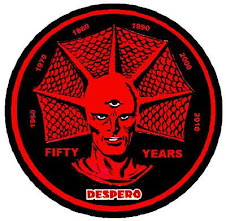
Getting shot with "pearl bullets" is actually what did Batman in, because a pearl necklace wasn't suggestive enough. Wonder Woman was hung from her lasso by a finger of the Manhunter statue. Aquaman drowned on Martian sands. They ran out of ironic deaths for Green Lantern and the Flash, so they just get dismembered, though Flash continued running like a chicken with its head cut off. Hardy-har. After invading the minds of all Martians simultaneously in search of clues, the yet surviving Superman was found in "the underground security bunker where our most powerful enemies are kept captive." A brief history of Martian imprisonment: In the Silver Age, they'd strap this flying belt thing on crooks and leave them floating at a stationary point in the atmosphere. Morrison stuck the White Martians in the Still Zone, a formless white void outside space/time. Malefic was held a gem-type thing. Here we have... Sciencells, but red. I guess it's a good thing that this is a Green Lantern story, then. Oh, and so many great Easter Eggs in the cells, with classic Martian Manhunter villains like Despero and... Starro... Johnny Quick? Various unidentifiable squiggles, though one is a girl, so, like, Bette Noir?
Superman was wearing a Kryptonite mask, and K'hym wanted to mentally probe his unconscious form for answers, as he was among the few beings capable of killing the League. J'Onn refused her, prompting a tirade about how he was okay with probing every Martian but not a single outsider, and how his loyalties are ever with Earth over Mars. A justifiable concern, but also D'Kay D'Razz's hand being tipped. More so when they line up all the corpses in a morgue, and all the cross slashes supposedly spell out the Martian words for "love" and "hate." Also, despite saving Superman's life, Manhunter randomly stabbed him to death with an undetected Kryptonite spike or especially powerful ring construct? Also, K'hym was inexplicably absent. And despite using heavy shadows as a handicap throughout the issue/run, the artist channels Ed McGuinness cartoon hyper-muscularity to depict Superman getting shived under lighting so bright that the only shadows cast on the entire pages were to highlight said inflated muscles. Being a sloppy second rate Doug Mahnke had gotten him this far, so is it too much to ask that we keep the artist we're deriving from consistent from panel to panel?
So, yeah, all of Mars burned again and M'yri'ah was unmasked (de-gloved?) as D'Kay, ending on the distasteful note of her on her knees being choked by our standing "hero" while the bones of Martian children were ghoulishly arranged in the background. D'Kay accused J'Onn of giving up on Mars. "I do not fight for lies of the mind, D'kay... and I never will!" How relatable. So inspiring. Smash cut to two pages of Scott Clark teasing the ongoing Firestorm story (which, remember, will ultimately be abandoned for the New 52.)
"Whatever Happened to the Manhunter from Mars?" was by writers Peter J. Tomasi & Geoff Johns, with art by Patrick Gleason & company. It is perhaps the worst Martian Manhunter story. You might dismiss that as hyperbole, and it's certainly not true at the level of raw craft, but bear with me. "For the Man Who has Everything..." and "Whatever Happened to the Man of Tomorrow?" are considered to be two of the greatest comic stories ever told, a pair of Alan Moore's most well regarded tales, and typically at minimum top 10 Superman yarns (though both lose impact the further perception moves past the Silver Age model, into the ongoing Byrne Man of Steel period.) Martian Manhunter is widely considered to be mint-flavored Superman. Blatantly cribbing from major Superman stories, much diminished in length and talent, on a highly visible maxi-series that eclipses any audience the Sleuth from Outer Space ever commands on his own, conforms the bias held by many that the Alien Atlas has nothing more to offer than being a stand-in or jobber for the Man of Steel. Plus cynical ultra-violence, which is itself reheated '80s Moore. Plus the story just stinks, and the artist can't maintain quality or character from panel to panel. Plus, all those wardrobe changes, and they're all Green Lantern costumes. There may be objectively worse stories, but few more harmful to the Martian Marvel.
Of course it's an imaginary story. Doi. I'm certain the writers did not expect the readership to be utterly clueless to this fact by the third page, and yet the story keeps on belaboring asserted facts that any experienced comics reader would dismiss on sight. It's hard not to get antsy reading pages of nonsense filler while waiting for the matter to resolve. So yeah, giant statue in Martian Manhunter's honor. J'Onn's family alive and expanded, with daughter K'hym herself now a Manhunter. Keeping the homicide witness family dog from earlier in the series as a pet, despite feeding it a steady diet of sandwich cookies, likely to cause daily severe stomach upset, pancreatitis, and chocolate poisoning. Batman feeling the need to list the ways in which every Leaguer but him is not entirely human, but failing to explain in the same panel why his head is in 3⁄4 but his mouth is a front view. I didn't know you could get punched that hard.
Getting shot with "pearl bullets" is actually what did Batman in, because a pearl necklace wasn't suggestive enough. Wonder Woman was hung from her lasso by a finger of the Manhunter statue. Aquaman drowned on Martian sands. They ran out of ironic deaths for Green Lantern and the Flash, so they just get dismembered, though Flash continued running like a chicken with its head cut off. Hardy-har. After invading the minds of all Martians simultaneously in search of clues, the yet surviving Superman was found in "the underground security bunker where our most powerful enemies are kept captive." A brief history of Martian imprisonment: In the Silver Age, they'd strap this flying belt thing on crooks and leave them floating at a stationary point in the atmosphere. Morrison stuck the White Martians in the Still Zone, a formless white void outside space/time. Malefic was held a gem-type thing. Here we have... Sciencells, but red. I guess it's a good thing that this is a Green Lantern story, then. Oh, and so many great Easter Eggs in the cells, with classic Martian Manhunter villains like Despero and... Starro... Johnny Quick? Various unidentifiable squiggles, though one is a girl, so, like, Bette Noir?
Superman was wearing a Kryptonite mask, and K'hym wanted to mentally probe his unconscious form for answers, as he was among the few beings capable of killing the League. J'Onn refused her, prompting a tirade about how he was okay with probing every Martian but not a single outsider, and how his loyalties are ever with Earth over Mars. A justifiable concern, but also D'Kay D'Razz's hand being tipped. More so when they line up all the corpses in a morgue, and all the cross slashes supposedly spell out the Martian words for "love" and "hate." Also, despite saving Superman's life, Manhunter randomly stabbed him to death with an undetected Kryptonite spike or especially powerful ring construct? Also, K'hym was inexplicably absent. And despite using heavy shadows as a handicap throughout the issue/run, the artist channels Ed McGuinness cartoon hyper-muscularity to depict Superman getting shived under lighting so bright that the only shadows cast on the entire pages were to highlight said inflated muscles. Being a sloppy second rate Doug Mahnke had gotten him this far, so is it too much to ask that we keep the artist we're deriving from consistent from panel to panel?
So, yeah, all of Mars burned again and M'yri'ah was unmasked (de-gloved?) as D'Kay, ending on the distasteful note of her on her knees being choked by our standing "hero" while the bones of Martian children were ghoulishly arranged in the background. D'Kay accused J'Onn of giving up on Mars. "I do not fight for lies of the mind, D'kay... and I never will!" How relatable. So inspiring. Smash cut to two pages of Scott Clark teasing the ongoing Firestorm story (which, remember, will ultimately be abandoned for the New 52.)
"Whatever Happened to the Manhunter from Mars?" was by writers Peter J. Tomasi & Geoff Johns, with art by Patrick Gleason & company. It is perhaps the worst Martian Manhunter story. You might dismiss that as hyperbole, and it's certainly not true at the level of raw craft, but bear with me. "For the Man Who has Everything..." and "Whatever Happened to the Man of Tomorrow?" are considered to be two of the greatest comic stories ever told, a pair of Alan Moore's most well regarded tales, and typically at minimum top 10 Superman yarns (though both lose impact the further perception moves past the Silver Age model, into the ongoing Byrne Man of Steel period.) Martian Manhunter is widely considered to be mint-flavored Superman. Blatantly cribbing from major Superman stories, much diminished in length and talent, on a highly visible maxi-series that eclipses any audience the Sleuth from Outer Space ever commands on his own, conforms the bias held by many that the Alien Atlas has nothing more to offer than being a stand-in or jobber for the Man of Steel. Plus cynical ultra-violence, which is itself reheated '80s Moore. Plus the story just stinks, and the artist can't maintain quality or character from panel to panel. Plus, all those wardrobe changes, and they're all Green Lantern costumes. There may be objectively worse stories, but few more harmful to the Martian Marvel.
Saturday, September 30, 2023
DC Universe Online Legends #10-26 (Late August, 2011 - Late May 2012)
The Daily Planet employees started demonstrating sometimes lethal super powers. The Justice League, especially Batman questioned Superman's judgment. The Man of Steel blamed himself for Martian Manhunter's loss of powers, though J'Onn believed that with the team being targeted, "I think the results would have been the same" with or without him. Lex Luthor framed Superman for a pair of super-villain deaths. Porter's art got all blobby under the deadline crunch. "Facts" was by Marv Wolfman, Howard Porter & John Livesay.
The Atom determined that Superman had been bitten, and that it was possible his powers were being remote-controlled. Superman feared his mind might be next, and isolated himself. Martian Manhunter continued to stand atound in the background. "Lost" was by Marv Wolfman & Mike S. Miller.
Then Superman accidentally killed Lois Lane and exiled himself into space. A green Tom Taylor came in for a couple fill-in issues involving space battles with Sinestro that were so jarring I thought I was looking at the wrong book. Tony Bedard leaves and Wolfman drags things out on his own, seemingly losing the plot but figuring out more opportunities to work in the conceit of player-generated original characters. Eventually, the past and future cyborg Lex Luthors teamed up and reset the entire timeline so that nothing in the series happened. There are a few issues with extra nice art, but otherwise this was a waste of everyone's time. Sorry I bothered to cover this at all.
The Atom determined that Superman had been bitten, and that it was possible his powers were being remote-controlled. Superman feared his mind might be next, and isolated himself. Martian Manhunter continued to stand atound in the background. "Lost" was by Marv Wolfman & Mike S. Miller.
Then Superman accidentally killed Lois Lane and exiled himself into space. A green Tom Taylor came in for a couple fill-in issues involving space battles with Sinestro that were so jarring I thought I was looking at the wrong book. Tony Bedard leaves and Wolfman drags things out on his own, seemingly losing the plot but figuring out more opportunities to work in the conceit of player-generated original characters. Eventually, the past and future cyborg Lex Luthors teamed up and reset the entire timeline so that nothing in the series happened. There are a few issues with extra nice art, but otherwise this was a waste of everyone's time. Sorry I bothered to cover this at all.
Labels:
2010s,
Batman,
Imaginary Stories,
Martian Manhunter,
Superman
Thursday, September 28, 2023
DC Universe Online Legends #9 (Early August, 2011)
Over time, Superman had become disheveled and aggreessive as his concern for Lois Lane and his captive friends grew. Then he and the Justice League were sent to battler nanite enhanced Arkham inmate. Superman was lured away by Lex Luthor, who promised that he'd broken away from Brainiac and made off with the bottled Daily Planet. Luthor needed help fending off Brainiac's enforcers, which is where Superman came in, and the Planet was restored. However, the Man of Steel was unknowingtly bitten by a nannite in the process. Back in Gotham, Martian Manhunter finally succumbed, left without powers and cradled by Wonder Woman in his natural form. Batman demanded that Superman adjust his priorities to protect the Earth instead of the Planet.
"Anarchy at Arkham" was by Marv Wolfman, Mike S. Miller, and Sergio Sandoval.
Labels:
2010s,
Batman,
Imaginary Stories,
Martian Manhunter,
Superman,
Wonder Woman
Tuesday, September 26, 2023
DC Universe Online Legends #8 (Late July, 2011)
Lex Luthor lost multiple limbs and an eye. Blaming Superman, he was rebuilt as a cyborg by Brainiac. At S.T.A.R. Labs, Martian Manhunter was still in bad shape after what the nanobots had done to him. Sweating profusely and against medical advise, Manhunter tested his abilities, and registered his disabilities. No shape-shifting, intangibility, or Martian Vision, but he still had strength and flight. Superman seemed to advise him to stop there, promising to restore him after the nanites had "bottled" and stolen his other powers away. Regardless, when Oracle dispatched heroes to search for Brainiac around the world, "Martian Manhunter insisted on pitching in, so I gave him North Africa. So far, none of them has found any trace of Brainiac."
"Reconstruction" was Tony Bedard & Mike S. Miller
Labels:
2010s,
Batman,
Imaginary Stories,
Martian Manhunter,
Superman
Sunday, September 24, 2023
DC Universe Online Legends #6 (Late June, 2011)
In the present, the Justice League escaped the Watchtower to S.T.A.R. Labs, where J'Onn J'Onzz collapsed. A scientist remarked, "I thought Martian Manhunter was as powerful as Superman?" The Atom replied, "He is, but Brainiac hit him with something new. Nano-machines that steal superpowers. We neutralized the ones inside J'Onn with a powerful electromagnetic field-- but not before they stole his telepathy, intangibility, and heat vision." Oh, and they forgot Aquaman in a tank back at HQ. Hah! In the futurem Atom gpot killed and Batman joined the fray.
"Downfall" was by writer Tony Bedard, art by Howard Porter & John Livesay and Pop Mhan.
Labels:
2010s,
Aquaman,
Atom,
Batman,
Imaginary Stories,
Martian Manhunter,
Superman,
Wonder Woman
Friday, September 22, 2023
DC Universe Online Legends #5 (Early June, 2011)
Exobytes continued to attack the Watchtower. "J'Onn's barely recovered and he was only attacked once." Aquaman couldn't stand unaided after two. Soon, life support was down, and everyone was headed for the transporters. Also, one-armed future Atom did a bunch of stuff with also future Lex Luthor, in the future, 'natch.
"Three Minutes" was by writer Marv Wolfman, Mike S. Miller, Adriana Melo, and Norman Lee.
Labels:
2010s,
Aquaman,
Atom,
Hawkman/Hawkgirl,
Imaginary Stories,
Martian Manhunter,
Wonder Woman
Tuesday, September 19, 2023
DC Universe Online Legends #4 (Late May, 2011)
"Gentlemen, I'm afraid your argument just became moot. We no longer have to take the fight to Brainiac... because Brainiac just brought the fight to us!" The JLA satellite was assailed by nanites and Brainiacs robot enforcers. Martian Manhunter saved Firestorm from the former with his laser vision. However, the robots were swiftly able to adjust to the Manhunter's invisibility, then infested him with nanites, with other heroes pained by his maintained telepathic link. Forestorm and Hawkman carried J'Onn to the infirmary. Oh, and in the future, The Ray lost his right arm to treachery by a revenge-driven Lex Luthor, as you do.
"Strike Force" was by writer Tony Bedard, pencils by Howard Porter & Adriana Melo, inks by John Livesay & Norman Lee. Nothing says consistency like alternating creative teams between issues in a continuing narrative. Also, that they're both meandering slugfests.
Sunday, September 17, 2023
Superman 80-Page Giant 2011 #1 (April, 2011)
In a parody of the "Grounded" extended story arc, Bizarro decided to isolate himself on Bizarro World and refused to learn anything. Eventually, the other heroic Bizarros threw him a parade, ruining everything, and prompting Bizarro to leave for Gotham City. "No Go Away Glad, Just Go Away" was by Steve Horton and Dan McDaid. The writer went on to do another book about an alien, Bowie: Stardust Rayguns & Moonage Daydreams, which he was hawking when I was at FAN EXPO Chicago this year. I'll tumble on it at Half Price Books one of these days.
Monday, September 11, 2023
DC Universe Online Legends #3 (Early May, 2011)
In the future, Power Girl was at the forefront of the surviving super-heroes begrudgingly working with Mech Luthor against Brainiac, the "interesting" story. In the present, Batman questioned the wisdom of Superman's plan to rescue the Daily Planet, and whether he would choose the same course if his wife wasn't in the building. Superman got in his face, scowling "You dare--?" So yeah, the prototype for Injustice, without the saving grace of platforming Tom Taylor. Oh, J'Onn was seated at the meeting room table in the present.
"Betrayal" was by writer Marv Wolfman, artist Mike S. Miller (yes, that one;) pencils by Adriana Melo, and inks by Norman Lee.
Labels:
2010s,
Batman,
Imaginary Stories,
Martian Manhunter,
Superman
Friday, September 8, 2023
DC Universe Online Legends #2 (Late April, 2011)
The DC event of the year begins, coinciding with the release of the wildly anticipated DCU MMO! Get ready for the ride of a lifetime with this immense, 26-issue biweekly series!The Lex Luthor of a post-apocalyptic future scrambles to escape Brainiac's invasion of Earth, but he must gather an army to stop the invasion. Who will he recruit? And in the present, Brainiac's first assault on Earth has begun, which recaps the incredibly rare DC UNIVERSE ONLINE LEGENDS #0! Comic book legend Marv Wolfman joins fan-favorite writer Tony Bedard and artist Howard Porter to tell the ultimate DC Universe Super Hero tale of good versus evil!In a classic example of "nobody actually cared," I had a smidge of difficulty finding a synopsis for this issue, which I myself will never read. So, I throw up the solicitation copy, before it gets lost to an indifferent internet. From what I read, this was supposed to be a weekly 52-style effort, but cooler heads prevailed. Running simultaneous to Brightest Day and Justice League: Generation Lost, DC really didn't even need a third fortnightly, yet here is the least regarded of them. Manhunter, Wonder Woman, and Aquaman helped battle Brainiac in his first(?) attack on Earth in the present day, because J'Onn was too dead to be of help in the future setting. It just occurred to me that means any further appearances in this story will probably be drawn by not-Howard Porter, who helped reintroduce the character to a broader audience in JLA. Like this series needed another strike.
"Control" was by writer Tony Bedard, pencils by Howard Porter & Adriana Melo, inks by John Livesay & Norman Lee.
Sunday, September 3, 2023
DC Universe Online Legends #0 (2010)
In this prelude story that was clearly created for digital presentation rather than print, in a bunch of big panels, Brainiac launched an attack on Metropolis. The Justice League, including Martian Manhunter, responded. Near the end, the Alien Atlas and other Leaguers arrived from the Watchtower, alerting on the scene hero Batman. Aquaman announced, "The cavalry is here!" Except he was on the Watchtower with J'Onn and Wonder Woman, so he was partially self-aggrandizing, not relieved. Inside a big Brainiac construct, they were zapped with some sort of electricity. Of the three, only Manhunter was back on his feet by story's end. "This is not over, Batman. Brainiac is sending these things all over the globe... more victims will be digitized and transported to wherever he sent those poor people. We must rethink our tactics if we ever hope to rescue them."
By Tony Bedard, Oliver Nome, Michael Lopez, & Livio Ramondelli. For a (for real) change, other major heroes jobbed for J'Onn. What witchcraft is this?
Labels:
2010s,
Aquaman,
Batman,
Imaginary Stories,
Martian Manhunter,
Superman,
Wonder Woman
Saturday, September 2, 2023
Tiny Titans #21 (December, 2009)
Here's another Martian Manhunter cameo, wherein the Tiny Titans request the use of the JLA's satellite base for their first Pet Club meeting, but the overabundance of loud, heavy livestock sees Green Lantern Hal Jordan deliver them to the moon, instead. By Franco & Art Baltazar
Tuesday, August 15, 2023
DC Universe Online Legends #1 (Early April, 2011)
Pretty much every DC title featured preview pages for this series, a tie-in to the just released massively multiplayer online role-playing game. It didn't enjoy the same impact or longevity as Injustice: Gods Among Us, but DC Universe Online saw staggard platform releases through 2019, and to my knowledge is still being supported. Anyway, Martian Manhunter was on those preview pages, or at least his corpse was. Lex Luthor had finally defeated the majority of Earth's metahumans, and killed Superman with a Kryptonite spear. Yeah, it's a safe assumption that this was where Zack Snyder got it from. Lex was helped by Brainiac, who of course betrayed him and began planning the world's destruction, once it was processed by his Exobytes. Are you sleepy? I am. This bedtime story is all too familiar...
"Legendary" was by writers Marv Wolfman & Tony Bedard, pencils by Howard Porter & Adriana Melo, inks by John Livesay & Norman Lee. At least a classic JLA artist was involved.
Labels:
2010s,
Imaginary Stories,
Martian Manhunter,
Superman
Tuesday, February 7, 2023
Conjurors #1-3 (April-June, 1999)
There's a popular assumption that conservatives are bad at comedy, because you can't punch down from a position of authority without working against most of the populace's interests. I don't entirely buy into that, as evidenced by both sides having traction for laying claim to George Carlin, still one of the greatest and most prescient comedians to ever live. Comedy thrives in finding lines and then crossing them, and lines divide two ways. Most of my favorite funny people of the '80s landed on the wrong side of my personal line, but they're as much a product of their time as anything, and changing times change the context of the humor. If you don't adapt, and social norms have definitely trended leftward since peak neoliberalism, you get left behind and easily treated as though you never were funny to begin with. Carlin's dancing back and fourth across that line is where his immortality lies. Based on comedy routines alone, Bill Cosby wouldn't have been cancelled today, but Pryor and Murphy would have.
I think a similar if much less well reasoned or researched argument could be made that conservatives can't do high fantasy. You can point out plenty of regressive politics in the genre, which is why I'll put most of my weight on the "high" part of the claim. A lot of fantasy is just historical fiction married to a romanticized vision of feudal existence, when the men were men and the women were chattel. Bill Willingham capped his career and popularized unto cottage industry taking fairy tales and forcing them into a hard reality modern world. Chuck Dixon & Eduardo Barreto's Elseworlds mini-series Conjurors mini-series tracks similarly. It posits a world reliant and fidelitous to magic in the same way ours is to technology. It gets muddy from there, because I suppose medicine overlaps with mysticism, so they seem to have all the same stuff we have. Actually, they have all the same buildings and clothing and everything else we associate with mid-to-late 20th century life, emphasized by increasing globe-trotting toward the end, and flashes of cosmic consequences at various points in the world. One of the defining principles of conservatism is a belief that we pretty much got everything right, so the status quo should be defended. Conjurors is more like Harry Potter, wherein a micro-community practices magic in secret, except here it's the broad public default. A boy might get busted reading Popular Science during school hours, but he's still dressed like Beaver Cleaver in a classroom lined with individual desks and a marm at the helm. But with wands, see? At the end of the book, all the magic users deprived of their sorcery have ready access to airplanes and helicopters to meet at Machu Picchu. Despite the shift from our world to a magical one taking place in pre-history, it is still recognizably our world, only mildly stunted in its stigmatized technology by a few decades at most.
I remember the mini-series arriving with a bit of a stink on it. It debuted outside the top 100, outsold by the $5.95 Doctor Midnite prestige format mini-series that would have typically been used for an Elseworlds. This was a $2.95 double-length floppy, and there's no break point in any of the issues to indicate that it was ever a six issue mini-series, not that it wouldn't have also been a telling format change. DC Comics simply did not produce books like Conjurors the way it actually came out. Also, Chuck Dixon was still a draw, but with mainstream audiences, mostly on books involving well armed, non-powered urban vigilantes, not the Vertigo crowd. Dixon is a justifiably well regarded scripter, but this isn't his wheelhouse, and it shows.
The book co-stars Zatanna, except it's Jennifer Morgan from The Warlord instead. A stage magician who is part of the 10% of the population naturally gifted with real magic, who spends much of her free time playing detective within the mystical community. There's a guy who vaguely resembles the Jared Stevens Fate with his rad long hair and eye tattoo... but he's a stage magician called Brother Power. It feels like people never gave or revoked approval for the familiar character types, maybe because Paul Dini had dibs on Zee, and Fate was getting aced to launch JSA? And wouldn't stage magicians be like paying to watch mathematicians or engineers at a blackboard? Could 10% of the population even support the magic needs of the other 90%, and does that mean the kid was in a classroom of only the 10% adepts? That's the initial pleasure but overall frustration of this mini-series. You spend the first issue trying to figure out which established IP have been shoehorned into a generic, often inappropriate role in a world where you're constantly second-guessing the premise. But then in the second part, Dixon gives up and just goes back to his comfort zone with the Challengers of the Unknown running around in a bi-plane on an rugged adventure. That schoolboy ends up offering a big information dump, and then just lingers on the periphery to react to stuff until the whimper of a finale. Why even?
I bring all this up because I only bought Conjurors second-hand as a discounted set to eventually cover it here for its novel inclusion of Bloodwynd, who appears in costume on a square inch in the background of the first cover. In the actual story, he's a bald black guy in a business suit who captures a spirit in a bottle. Eventually, the spirit escapes, and sends Bloodwynd out a skyscraper window to fall head first to his death. He was basically JLI-era Dr. Mist, but I guess Bloodwynd had more *snicker* commercial cache? Or more simply, THIS IS THE REMIX, so the entirely gettable Mist uses somebody else's moniker. And then is disposed of off-panel, because the status quo dictates that the best kind of inclusion is tokenism.
Labels:
1990s,
Bloodwynd,
Imaginary Stories,
Martian Manhunter
Saturday, September 12, 2015
JL8 (Unpublished)

As found at Universe B: The Unpublished Grant Morrison, the acclaimed JLA writer at one point around 2004 discussed with editor Dan Raspler how he would approach a return to the Justice League. The idea was to reverse the "Magnificent Seven" paradigm that he'd used to restore the franchise in favor of a more classic Avengers formula of a team staffed with the most also of also-rans that couldn't support their own solo projects, but could be intriguing in a team book. The heroes would have been extremely minor to allow for the greatest latitude for revisions, including the likes of The Enchantress, Alias The Spider, and Etrigan the Demon, used as approximate parallels to Avengers like Scarlet Witch, Hawkeye, the Hulk, etc. Less clear on the analogue front was the one JLA founder to transition to the z-team, the Martian Manhunter, now with heavier emphasis on reflecting the "Manhunter" along the lines of Archie Goodwin and Walt Simonson's revision of Paul Kirk. "Morrison envisioned the character in a more brutal, alien form... much of the story written around the character was set on a ruined Mars and this was retained when Morrison re-worked the title as Frankenstein." As mentioned, "JL8" evolved into the cycle of Seven Soldiers of Victory mini-series released in 2005. I've often bemoaned the lack of a Morrison Martian Manhunter book, but this... would not have been what I had in mind.
Labels:
2000s,
Imaginary Stories,
JLA,
Martian Manhunter
Wednesday, January 28, 2015
Podcast: Martian Manhunter Multiversity
Episode #4
Look for us on iTunes!As part of a Super Blog Team-Up crossover, we look at Imaginary Stories featuring the unfamiliar J'Onn J'Onzzes of parallel dimensions! Trip the light fantastic with the below blogs/vlogs/podcasts!
#SBTU Multiversity
- Chasing Amazing: The Case Against Spider-Man Reign
- Superior Spider-Talk: The Case For Spider-Man: Reign
- Between The Pages: A Tale Of Two Cities On The Edge Of Forever
- Bronze Age Babies: Things Are a Little Different Around Here...
- Firestorm Fan on Infinite Earths: Countdown Arena
- Flodo's Page: The Ballad of Two Green Lanterns
- The Marvel Super Heroes Podcast: Doctor Zero
- In My Not So Humble Opinion: The Many Worlds of Tesla Strong
- The Legion of Super-Bloggers: Star Trek/Legion of Super-Heroes
- Longbox Graveyard: X-Men #141 & 142- Days of Future Past
- Mystery Vlog: Marvel & DC's Secret Crossover- Avengers #85–86 (1st Squadron Supreme)
- Superhero Satellite: Marvel Comics' Star Comics Line “Licensed Reality and Parallel Properties”
- Ultraverse Network: Altered Reality- The Ultraverse Before and After Black September
- The Unspoken Decade: THE GHOST IN THE MACHINE- ROBOCOP VERSUS TERMINATOR
- The Unspoken Decade: 5 Batmen, 1 Superman, ZERO HOUR
- Tweet host Diabolu Frank directly, or probe @rolledspine as a group.
- Email Diabolu
- If the main Idol-Head of Diabolu blog isn't your thing, try the umbrella Rolled Spine Podcasts.
Labels:
Imaginary Stories,
Martian Manhunter,
Podcast
Subscribe to:
Posts (Atom)