

In a key divergence, the writer incorporates elements of the mini-series Doomsday Clock, which to my horror is from nearly eight years ago (though the maxi-series took two years to complete, so its latest reveals are closer to a half-decade-plus old.) Actually, the writer is surprisingly deferential to Geoff Johns' work in general, so maybe he still has sway as the former CCO, or it's just an acknowledgement of his impact at the company. Anyway, the reference is to a government think tank meant to replace the super-heroes lost after the forced retirement on the Justice Society in the early 1950s. Dr. Niles Caulder, Will Magnus, Professor Martin Stein, and Simon Stagg are named and credentialed, so unless one of their projects involved the study of Ian Karkull, these guys would be a minimum of about 30 years old at the time. They would soon reference baby Kal-El's rocket from Krypton, and human frailty suggests these guys would be 60+ today at most, so we're talking a setting of about the same time as 1994's Zero Hour: Crisis in Time that gave us the Martian Manhunter's 35 Years Ago time frame, then meaning 1959.
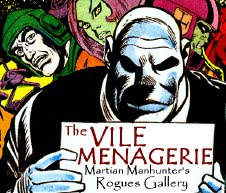
J'onn J'onzz's use as an historical benchmark is almost exactly the same in execution between the "1987" and 2025 editions of History, but with wildly different relative contexts. Timeline-wise, Martian Manhunter anchors the same gap between "heroic ages" from Justices Society to League that he once did sharing a page with Captain Comet. Except now, the presumably 1950s-set Comet forms a short-lived "Justice Alliance" with other characters published (but not previously canonically set) in that decade: Prince Ra-Man, Automan, Tiger-Man, and Congorilla. What used to be about a four year difference in age between Comet and Manhunter is probably now more like forty years. It makes me wonder where and if the Justice Experience has standing in this sliding timeline, since they were a late 60s/early '70s set team, but Cameron Chase is likely not meant to be in her sixties after seeing her father murdered by Dr. Trap as a child.

"In a small laboratory in Colorado, Dr. Mark Saul Erdel tested his teleportation ray for the first time. Inadvertently, he wrenched through space and time a Martian named J'Onn J'Onzz--Note the mixed caps, which will come up again later/earlier. This book was by writer Mark Waid and artists Todd Nauck and Jerry Ordway. I'd initially assumed that one was inking the other to various degrees, but once I actually read the book, it was clear each was providing full art on their individual pages, with Nauck drawing the Manhunter one. Dave Wielgosz is credited with researching the project with Waid, and offers copious end notes to the issue. The 1998 volume of Martian Manhunter is referenced a few times, including some Tom Mandrake art. Specifically, Ma'aleca'andra's colonization of the solar system. There's also a weirdly worded reference to Kelly/Mahnke JLA about how White Martians "arise" around the time of the Crusades on Earth. The prior Ostrander reference was from Earth's pre-history, with White Martians already competing with greens in the expansion. Even if you excuse it as a reference to the phenomenon of "Burning Martians," one of those was killed by Vandal Savage in the caveman days, so it's still needlessly anachronous. Ma'alefa'ak's plague is unleashed between the times of the Earl of Strethmere and Captain Fear in the early 18th Century of Earth. J'Onn's teleportation is listed between the inital I-Spy activities of King Faraday, and Slam Bradley's arrival in Gotham City.




























3 comments:
Thank you for the clarification of the timeline for me, I assumed that when the text said decades after the J S A vanished that would be in the 1970's or 80's. I prefer when when when J'Onn's debut on Earth is set in the 1950's, so he's the oldest of the original 7 members of the J L A & the most experienced.
Have you been keeping up with his Absolute run?
No, I haven't read any Absolute comics so far, but I will pick up the Martian Manhunter trade paperback. From what I understand, such liberties have been taken as to render it Martian Manhunter in name only, but I'll still give it a read.
As for New History of DC, yeah, I think J'Onn just fits in the 1950s so well that it bugs me to wrench him out of that time period. That combination of conformity and paranoia is a perfect motivation for the paths J'Onn takes, and you'd have to stick him behind the Iron Curtain or something to replicate it in later decades.
Post a Comment