

I've brought up how my parents and uncle read comic books to varying degrees, and that there was no stigma surrounding them in my household growing up. As a result, I've been around comic books for longer than I have memories of being introduced to many aspects of them. Further, by the 1970s, you had a decent pool of varied super-hero and adjacent media adaptations, including radio dramas, movie serials, motion pictures, live action television, animation, coloring/activity books, and read along (or not) audio presentations (mostly 45RPM or LP vinyl records, but cassettes were incoming.) As a result, a lot of specific properties are what I refer to as personally "primordial," present and exerting influence over me before my conscious awareness of their existence. Superman, Batman, Robin, Wonder Woman, Aquaman-- all primordial, or near enough to it. Martian Manhunter was not that. Neither was the Justice League. Those five DC properties starred on the Hanna-Barbera Saturday Morning cartoon series Super Friends, running in ABC Television from 1973. There was preexisting media for each member of the quintet, so I can't say whether or which egg preceded what chicken, just that I knew who they were before I could write my own name.
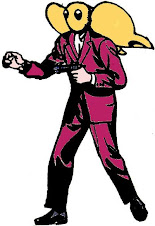
Whether you consider it an over or understatement, this is also why The Flash, Green Arrow, Green Lantern, and Plastic Man will always be at least one tier lower, because they were less prominent and later arriving Super Friends than Wendy, Marvin and Wonder Dog. This is more or less the same tier shared by The Atom, Hawkman, the concept of Superboy, and the Teen Titans. You see, the Filmation cartoon package The Superman/Aquaman Hour of Adventure that ran on CBS-TV in 1967 had been chopped up and syndicated on local UHF, which I dimly recall as adjunct to the ongoing concern of Super Friends on broadcast television. Specifically, I was introduced to the concept of a "Justice League of America" through their measly 3 six-minute shorts on that program (though all of the solo hero shorts were associated with each other as a team via bumpers that ran around commercial breaks. I definitely was puzzled for some time about how the Super Friends and Justice League related to one another. I rarely if ever saw a Super Friends comic on the stands, and would have disregarded it as "kid's stuff." I did see JLofA comics on occasions, and was drawn to some iconic George Perez covers, until I looked at the bland pap under those covers. It seemed to me that the Super Friends had a lot more members, and of diverse ethnotype, but there were a few unfamiliar (always white) faces in the Justice League. Not-Plastic Man. Blond in Fishnets. Girl with Bug in Hair. Fire Head. Red Tornado. Dude was red with a "T" on his chest who made a tornado out of his lower body. What else would he be called?
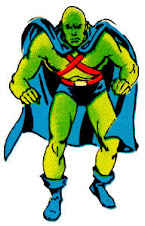
Martian Manhunter wasn't even on that tier. Probably not even the tier below that tier. Black Vulcan was a Super Friend. Space Ghost had his own cartoon. Martian Manhunter needed Martian Vision to look up to the likes of Mighty Mightor, Dynomutt, Birdman, and the Galaxy Trio. He was grandfathered from before the time of anyone I knew, serving on only the least powerful, respected, or read brand extensions. Until Justice League: A Midsummer's Nightmare #2. Prior to that, I was collecting the post-Zero Hour Jones/Wojtkiewicz J.L.A. run, which started off terrible, but had worked its way up the defensible. It was one of three Justice League titles that were limping along, including the aforementioned Justice League Task Force and Extreme Justice, which were simultaneously cancelled to make room for a Silver Age revivalist take by cult favorite Grant Morrison and "that guy from The Ray who followed Joe Quesada." To give the new team prep time to hopefully knock it out of the park, and because Morrison didn't want to waste time from his launch actually gathering his proposed line-up, a stopgap 3-issue mini-series was thrown together. With two writers and two dissimilar pencillers, plus covers by the funny JLI guy, it looked a bit shaggy, and was only a modest success.
I had dinner with fellow podcaster Mike Atchison of Mike's Comic Shop Roadshow and Campus Comics Cast the other night, and he asked me how I became a Martian Manhunter fan. I told him that it was like the 1995 teenybopper romcom/stealth Jane Austen adaptation Clueless, when Cher finally puts the pieces together to realize that she was actually in love with her "annoying" ex-stepbrother Josh (not in an incognito browser way.) There was that one moment in "Midsummer's Nightmare" when, even after having questioned the illusion of his resurrected family, prefers to hold to it as tight as he could, because he didn't want to consider the possibility that the tragedy he knew in his bones (but not his active consciousness) had occurred. His family was dead, and he'd mourned them for untold years, but he had them back, even if it was a fantasy. Until some twits ruined that fantasy-- killed his wife and daughter all over again, bringing that rage and loss back in a crushing wave. It was like that line from Dark Knight Returns where The Batman confesses he sometimes likes to share that pain with those deserving, except without the implied sadism and narcissism. J'Onn J'Onzz had just relived the worst moment in his life, and that would have consequences for those responsible. Top tier heroes like Wonder Woman and Green Lantern looked on in sympathy, awe, and terror as a simple "Gumby" family man reverted to the Manhunter from Mars. That moment... that splash page by Jeff Johnson that somehow captured it all, gave me chills and sent my heart instantaneously backward to "Goodbye" and that first Oreos joke and one of my favorite action figures that my brother had lost at juvie camp. All the times the Alien Atlas could have been a favorite, each time thwarted in some manner, finally overcome. I asked Mark Waid about it, and he told me that was Fabian Nicieza's touch. I still mean to thank him when I get the chance.
For good and ill, that moment came thirty years ago, as I mark the 19th year of the continued (if far from routinely continuous) life of this blog, and the WebTV site was around years before that. All hinged on that moment, but not sustained solely by it. Because two months later, JLA #1 by Morrison and Howard Porter blew me away all over again. Conventional wisdom was that the time of super-teams filled with marquee players had passed-- that they were detrimental to the autonomy and steerage of the book's creative team. You couldn't "do" anything with icons, so readers get bored. JLA proved the appeal of incomparable icons was inherent, if you just did them up right, which is to say BIG. Widescreen BIG. Thwarting global invasions BIG. Wrestling with angels and demon BIG. Inserting everyone's distinctive logos into dialogue balloons when their names were spoken BIG. For the first time, the Justice League was the same thing as the Super Friends, but even better, and much, much BIGGER. And even as the seventh of seven, it was a Magnificent Seven, and when his name was in their mouth, it was the Martian Manhunter logo. Just the same as Batman, Superman, Wonder Woman, The Flash, Green Lantern, and Aquaman. Yet, unlike that pantheon, I still barely knew the Sleuth from Outer Space. But I now, perhaps ironically, had a burning desire to change that.



















1 comment:
Awesome origin story! I wish I could've seen the Web TV site.
Post a Comment