Showing posts with label Black Canary. Show all posts

Monday, July 29, 2024

Action Comics #595 (December, 1987)

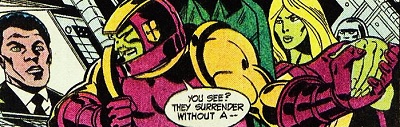
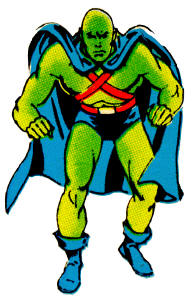
Silver Banshee walked the streets of Metropolis, killing men indiscriminately as she searched a series of local bookstores. After one policeman under Maggie Sawyer's command was killed, and another nearly so, Superman finally showed up... only to die himself. Various parties, including members of Justice League International, mourned his loss. Black Canary and the Batman believed that someone should address the situation, while the Manhunter from Mars insisted, "Something must be done!"

Lying in state, Superman's ghost lifted from his glass encased body, stating "I have been cut down before my work was done! I must finish what I set out to do. Only then can I rest. Beware, Silver Banshee! Your time of judgment is at hand!" Jimmy Olsen had trailed the villainess to another bookstore, and nearly doomed himself when Spectral Superman showed. Once her powers failed to effect his immaterial form, she blew herself up trying to destroy him with her Banshee cry. Only after did a living Superman reveal himself, while his "ghost" resumed his nat-- er-- typical Martian form.

The Sleuth from Outer Space had deduced that there was a visual component to the Silver Banshee's powers that prevented her from killing someone that she couldn't accurately identify. The Kryptonian form held up better than human victims, but Superman was still placed in a deathlike coma state until the Aien Atlas jumpstarted his brain with undefined "mental powers." It's a huge stretch that doesn't stand up to scrutiny, since she'd killed multiple unidentified dudes, but Perry White lampshades it with "Well, I guess that's a satisfactory explanation... at least it'll have to do if that's all we're going to get." Still, they played fair by announcing J'Onn J'Onzz's presence earlier in the story, and allowing him a showcase for his detective skills.

"The Ghost of Superman" was by John Byrne, with Keith Williams. Crisis on Infinite Earths had ended with 1985, but it took until June of the following year for "Whatever Happened to the Man of Tomorrow?" to wipe the board clean of Pre-Crisis Superman. Then another four months later, John Byrne used the oldest but "spare" of his two Man of Steel titles to continue the team-up format of the recently canceled DC Comics Presents, beginning with #584. I'm fuzzy on when I started picking the title up, but most probably it was with this issue, so it would have been nice to already be familiar with Martian Manhunter for the reveal. It was apparently the first appearance of Silver Banshee as well, though I could have sworn she'd made an earlier one. Obviously she was super cool, and a fairly strong addition to the rogues gallery, so it's disappointing that she's been more or less relegated to a second hand Supergirl foil. Kal-El's so powerful and so visible that he really can't spare someone so formidable, just because neither Banshee or his cousin possess a y-chromosome.

Monday, June 24, 2024

The Weird #2-3 (May-June, 1988)

Smarmy TV news reporter undermines heroes and wonders aloud about The Weird. The remains of Walter Langley show off "his" powers for "his" son, then explains the basic cosmology of the story. Macrolatts are oppressive energy vampires who seek to expand their empire to our reality. Zarolatts are passive beings who are fed upon unto nonexistence by Macrolatts. Going straight from one reality to another means destruction, so the Macrolatts seduced homicidal narcissist loser Jason Morgan into transforming into a being capable of creating a bridge that would allow them safe passage. The Weird's proximity to these events while being fed upon gave it access to these events and a means of escape through the initial bridge, and its growing power is in service to its conviction toward the newly learned concept of freedom. Returned home, Billy Langley keeps all this from his mother.

"The Jason" found his failed businessman father's body hanging when he was four. His mother turned to the bottle and maybe prostitution before Jason found her body in bed after one of her gentleman callers took a razor to her. Despite being an impoverished orphan who was academically lax and had no prospects, Jason's belief that he was better than everyone else held fast despite his poor social skills, being an incel, living on the streets, doing a stint in prison for the violent assault of a woman, and eventually ending up a garbageman. He was primed to turn on humanity, ready to believe anything the Macrolatts told him if it meant power, and using it to take murderous advantage of at least one woman victim. Although held captive for a time, The Weird eventually freed himself, and at great personal distress, determined that the only way to stop The Jason was to snap his neck.

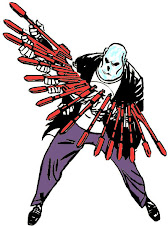
The Weird played hide & seek with Superman for fourteen continuous pages in one issue. The Justice League looked on throughout a couple of issues as The Weird had entanglements with other, more powerful beings. "Unbelievable! Not even J'Onn J'Onzz's incredible strength seems able to put a dent in that barrier." Nor Captain Atom's quantum energies, not Green Lantern Guy Gardner's power ring, nor Doctor Fate's mysticism, et cetera. Even after witnessing The Jason's execution, they mostly offer disapproving glares. Well-- that and an order from the Dark Knight to the green one. "It was just as you predicted, Batman. My powers of invisibility caught him completely by surprise." Unable to adapt in time, The Weird took two blows and a hard tumble. Unfortunately, two Macrolatts had escaped to possess Superman and... Nuklon? I guess for his variable density abilities, but yeah, not the guy you'd expect when you have all these powerhouses in Metropolis and Infinity Incorporated is all the way on the West Coast. Also, there was a whole bit about how The Weird had taken over a corpse rather than displace the life energy of a host, so by the rules laid out in the story, both these guys should have died.

"Questions" & "Confrontation" were by Jim Starlin, Berni Wrightson, & Dan Green. These single word narrative direction story titles speak to the reductive nature of the mini-series. Each issue has a few points to check off on a predictable agenda, and the rest is just vamping to fill out space. The art has its moments, but I think everyone involved would have benefited from the space being cut in half. It reminds me of when George Pérez quit Infinity Gauntlet midway through because he was sick of drawing fight scenes where a bunch of people gang up on Thanos and lose. So much of this series involves powerhouse DC heroes floating impotently outside energy fields or getting slapped around by what ultimately prove to be nothing characters, for clout more than narrative necessity. It's all so cheap, pointless, and passionless-- a purely commercial venture that nonetheless can't conceal its distaste toward its own existence. Anyway, I got through the second issue after coming home from HeroesCon, realized the Alien Atlas wasn't in that one, and decided we'd just double up on issues for the following week. This would keep, especially since I have to do my own scans on this thing.

Tuesday, June 11, 2024

The Weird #1 (April, 1988)

A fit blond white man with roughly half his physical form replaced by a jagged green crystalline substance sat cross-legged on the bathroom floor in his apartment and conjured an atomic energy form. This was an intended "bridge" for his "friends." A red gem of similar coarseness to his own body began to form in midair, but then an energy escaped it, leaving the gem to crumble away. The man, Jason Morgan, was shocked and dismayed.

The small energy ribbon hovered in the sky above Metropolis, and Superman investigated. The energy had no atomic structure-- no mass-- but when the Man of Steel passed his hand through it, he was knocked back three miles. By the time he flew back, J'Onn J'Onzz and Captain Atom had arrived to observe the energy. An hour later, there was a military cordon and a No Fly Zone, then the new Justice League were on the scene. Examinations through varied disciplines were attempted, including a science team on The Bug aircraft consisting of Blue Beetle, Batman, Black Canary, and more. When Doctor Fate's mystics were stymied, Green Lantern Guy Gardner attempted to probe deeper with his Oan Power Ring. An energy surged knocked out Gardner and blacked out the Bug and city as a whole.

Two probes were fired off by the energy ribbon in opposite directions. One was pursued by Superman, as it passed immaterially through a genetics lab's fluid beakers and into its complex computers. The other was followed by Manhunter to a funeral parlor, where the Martian met repeated resistance in contrast to the immediate aid and trust conferred upon the Kryptonian. The energy went into a service in progress, and caused the body of Walter Langley to vanish as mourners looked on in shock and horror. The probes reunited with the core energy, and the gathered heroes watched as the borrowed elements slowly coalesced into a new physical body of a lanky adult male in a queer red and black garb. Super senses detected that this being was not quite right, a sort of cosmic Frankenstein made up of misfit parts that were not quite human. The being collapsed into unconsciousness from the effort, and was taken to S.T.A.R. Labs for testing. Super senses determined that the Weird being, as dubbed by Blue Beetle, was molecularly unstable to a degree that its energies threatened a detonation that could destroy the Earth.

The Weird awakened and assisted upon attending to tasks that "he" refused to take the time to explain to the super-heroes, who attempted by failed to detain him/it by force. The Weird had its vibratory patterns thrown off by the proximity of the super-beings during its maturation period, which had altered the form in unexpected ways. This allowed The Weird to unintentionally push the Alien Atlas across a room, although the Manhunter fared better in a follow-up physical altercation than most of the rest of the League with their varied abilities. Regardless, the Weird at least briefly laid low everyone but Batman, while Superman had left prior to the fight to correct a compromised passenger jet's flight elsewhere.

The Weird sought out "The Jason," the half-crystal man that had been conjuring earlier, but found only his empty apartment. It/he declared the Jason to have a "dark and twisted nature" that would see him pursue world domination. However, a misalignment of the harmonic vibrations in the apartment would prevent Jason Morgan from attempting another inter-dimensional bridge for 18 hours, so the former Walt Langley had some time to kill, The Weird retained some of Langley's memories and motivations, causing him to visit Walt's former home. His widow, Eva, bemoaned his fatal mugging and the scene at the funeral parlor. "I don't care what the police say, I'm sure it's all the doing of that terrible green man." Meanwhile, in the back yard, young Billy Langley recognized his visiting father, even in this altered form...

"Conception" was by Jim Starlin, Berni Wrightson, & Dan Green. Following by introduction to Justice League International with their eighth issue, my reintroduction to the Man of Tomorrow via John Byrne, and a broader exploration of the Post-Crisis landscape moving out from the Millennium event series, I was a target audience member for The Weird house ads. However, I don't know when I had access to individual issues, and do know that I only read the first issue at some point after the final one. Neither experience was satisfying, and I won't know if I ever bothered with the meat of that story sandwich until I move on to covering the second installment. One quarter of "The Studio" and the crown prince of cosmic comics were long time friends who would prove a formidable pairing... on Batman: The Cult. This excessively long warm-up session noodles for 38 pages of heroes impotently watching stuff, then getting trashed by the second in a series of very powerful but rather boring sci-fi/magical Mister Spocks based on the visual template of Syzygy Darklock. I do like though that both Starlin and Wrightson are clearly a more comfortable fit on the Sleuth from Outer Space over Superman. Wrightson seems to relish his dark, exaggerated features over an off-model Man of Steel, with a broad flat nose and thick lips suggesting a less Caucasoid interpretation of the Manhunter, with the strongly implied prejudice that goes with it. I do wonder if Grant Morrison was influenced in his views of J'Onn J'Onzz here (and I think that's the only name he's been referred to in the issue.) Also, Wrightson's horror background gives the takedown of the heroes a more ominous quality than the story would seem to dictate, a sort of accidental element of interest in what otherwise feels more akin to a Radio Shack rudimentary science edutainment giveaway. The issue is way too long to accomplish so little, and I do wonder if this was initiated as a prestige squarebound mini-series for more niche audiences that was either determined not to rate the expensive ask, or was diverted to take advantage of the JLI's building heat on the newsstand.

Wednesday, April 5, 2023

Podcast- War of the Worlds, 1984

Episode #37

Look for us on iTunes, Spotify or directly download an art-tagged MP3 from the Internet Archive


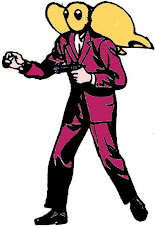
Martian Manhunter in...

We enjoy dialogue on the red planet, so here are our non-telepathic contact options:

Thursday, March 30, 2023

Justice League of America #230 (September, 1984)


The breathable air was sucked out of the environment within the JLA Satellite. Bel Juz convinced The Marshal to have his warships destroy the space vessel that caused the explosive decompression aboard the satellite before it could get too close... and Martian Manhunter could be positively identified, to prevent his potential martyrdom. Hunter Commander J'en overheard their conversation while eavesdropping aboard the command ship "The Vengeance," but could only look on in horror as her former lover seemingly died a second time before her eyes. The Hawks' Thanagarian Star Cruiser had been completely obliterated by laser fire, leaving no trace. The Chairman of the Presidium of the Supreme Soviet, Konstantin Chernenko, swayed President of the United States Ronald Reagan to deploy their combined nuclear capabilities against the Martian armada. Nine key international military bases had already been leveled by the invaders. All was lost.

Well, about that. As demonstrated by J'onn J'onzz before his departure, the League had specialized space suits aboard the satellite that allowed the heroes to use their powers while protected from the ravages of space. The League ambushed Martian troops that explored the disabled satellite. Hawkgirl and Hawkman had maneuvered their ships' warp drive to evade fire and retaliate. J'en wielded her credentials and the stun setting on her pistol to take out three members of the Soldiers of the Red Brotherhood. Stealing a scout craft, she found that J'onn J'onzz had once again been miraculously thrown clear of his ship before its destruction.


When roused, the Sleuth from Outer Space was relieved to learn that the full attack upon Earth had not yet begun, and that there was yet time to stop The Marshal. J'en still believed in her leader and their mission, drawing her pistol on J'onn, who despite no outward resistance insisted that she would have to kill him. Tearfully, J'en let go of her quest for Martian glory, as well as the grip on her laser. Just as the Hawks prepared for their final stand, The Marshal placed his order. "This day, we will write in fire on the pages of Martian history. Technician, open a channel to the entire fleet-- I wish to speak to all my warriors."

This was the moment the Manhunter from Mars, having made his way aboard The Vengeance, had been waiting for. The challenge of a duel, before the entire Martian force, who could already plainly see that J'onn J'onzz had not fled like a coward, as their commander had claimed. Bel whispered, "The eyes of the fleet are upon you, my leader! Kill him now, prove him a weakling, and you are untouchable!" The Marshal literally ripped off his shirt and assailed the man he'd framed as a traitor. Despite his genetic enhancements, the Marshal struggled against his foe, and used an invisibility technique outlawed for a millennium in duels of honor. Bel insisted, "What matter? The Marshal is above the law!" After more blows were traded, the Marshal tried to two-handed choke J'onzz to death, but the Alien Atlas picked him up by the midsection and smashed the militant head-first into equipment, leaving the Marshal out cold. Bel Juz defied this result, grabbing a pistol from a soldier with the intent to kill J'onzz herself. However, Firestorm had recovered from his last brush with Martian muscle and pursued the Manhunter, only to use his powers to save J'onn from Bel's blast.


J'onzz ordered the armada back to Mars II. The Soviets and the U.S. stepped back from probable nuclear winter. All seemed to be right, except the fleet would be leaving short one Martian Marvel. As Aquaman observed, "His people don't want him... His presence would be a constant reminder of their humiliation... J'onzz showed them that they'd sold their hearts to a madman and coward. The Marshal betrayed their faith in him... but J'onn J'onzz forced them to face reality... and that's something a nation can never forgive...

"The Concluding Chapter: War of the Worlds 1984: Part Three: Blessed Is the Peacemaker" was by Gerry Conway & Alan Kupperberg. While not as embarrassing as to be defeated by the slighest hint of a flamable, the Martians regardless proved pushovers when faced with non-powered heroines in fetish gear kicking them really hard in weightless space. I still like this story, and love the Patton/Giordano covers, but the illogic and mere lip service paid to stakes make it fold before the slightest critical analysis. None of this material makes it into Post-Crisis continuity, so my buzz over the observance for Bronze Age Martian continuity is further harshed by none of this having "happened" in canon going further than a year out.

Wednesday, March 29, 2023

Justice League of America #229 (August, 1984)


Probably more sore about being manhandled on the Martian Marvel's previous visit to Earth during his JLofA tenure than because of legitimate concerns, Firestorm let J'onn J'onzz know he would be keeping an eye on him in the event of a double-cross. "If you believe that, we have nothing more to say." The Martian invaders had destroyed most of a space shuttle orbiting the planet, and the pair of heroes were dispatch to address the remains. Too weak to control the nose cone where three surviving astronauts hid, the Nuclear Man cursed the Martian for imperiling them, but managed to salvage the attempt with his matter restructuring abilities. Upon return, Firestorm was still finger-pointing, and Zatanna chastised him for it. The Thanagarians vowed to stand by Earth until the end, and when military police showed up to round up all "ETTIES," Firestorm's defense showed that his prejudice didn't extend past J'onzz.

Then-President Ronald Reagan apologized to Aquaman for the incident, and explained that world leaders were intent on pushing back against the Martians. Both men bemoaned the unexplained absence of Green Lantern, The Flash, Wonder Woman, and Superman, a too-common recent trend. Elongated Man reported that one silver lining was that he was seeing people around the world unite as one against the extra-terrestrial threat.


Aboard his warship, The Marshal expressed his confidence to his lover and confidant, Bel Juz, in her first appearance in a dozen years (and second overall.) She expressed doubts... that the Marshal should have slain J'onzz already, and whether his bravado masked insecurity. When the U.N. Secretary* announced the world's rejection of the Marshal's terms of surrender via satellite television broadcast, the furious fascist admitted as much. The overall resistance was not a concern so much as the rival in their midst. "I had to send my personal guard after him... because too many of our warriors are still loyal to the J'onzz mystique... You know the man, Bel Juz. You recognize his charisma." Indeed, she feared her own betrayal of the Martian people would eventually be uncovered by the Sleuth from Outer Space, taking on the Marshal and encouraging his coup as a means of protecting herself... even if it meant worlds at war.

The Martian strike was swift and unprecedented. They had somehow managed to accumulate hundreds if not thousands of interstellar attack craft with invisibility, allowing them to ambush the Hawks' Thanagarian Star Cruiser, the JLA Satellite, and numerous key cities around the world simultaneously. Terrestrial weapons were useless, and the League's base was left shattered. Challenger, in golden battle gear, boarded the remains in search of survivors. There were in fact no casualties, and though the robotic Challenger battered Aquaman, its was taken out by a single "wall-smasher arrow." Firestorm still distrusted the Manhunter, and took out a trio of actual Martian invaders while searching for him. Finding J'onzz donning a spacesuit, the Nuclear Man assumed the Alien Atlas was abandoning his allies. Silently swatting the nuisance aside, the Manhunter climbed into a League spacecraft, fired upon an exterior wall, and flew off. Firestorm was left to fend for himself in the ensuing explosive decompression.


"War of the Worlds, 1984: Part Two: Bitter Ashes" was by Gerry Conway, Alan Kupperberg, & Pablo Marcos. Going back to his underappreciated Blue Devil run, Alan's been my favorite Kupp-brother, and a welcome relief from Tuska. It's still jarring how completely Challenger was redesigned from one issue to the next, but I'd assume the second pass was closer to the desired vision. Maybe The Marshal had a point about needing to take over, since the last time we were on Mars II, his people were still living in tents waving swords, and now they have an entire armada? As for J'onn's pronounced charisma... I wish that had been present enough in any of his solo series to have kept any of them going for longer than a few years. I do like this story, especially its rare care for Mars II continuity, but it needed more room to actually demonstrate the Martians as the threat they're spoken as. Plus, all those Marshal monologues undermine the attempt to create any doubt in the reader's mind about the Manhunter's loyalties.

* Technically it should be the Secretary-General, who in 1984 was Javier Pérez de Cuéllar, although perhaps they got confused and thought it was his eventual successor, Kofi Annan?

Tuesday, March 28, 2023

Justice League of America #228 (July, 1984)


In 1961, Vostok 1 orbited the Earth. A dying Mars took no notice.
In 1963, Project Gemini yielded the first Terran spacewalk. "On Mars, a grim decision is taken... and a once-great race prepares for a strange exodus..."
In 1969, Apollo 11 landed on Earth's moon. "On Mars, as before, no notice is taken... for now, no one is there."
In 1976, Viking 1 lands on the Red Planet... "conforming some scientists' fear that Mars is, indeed, a dead world."
In 1984, an abandoned and neglected Viking 2 found new life on Mars, or rather was found by it.

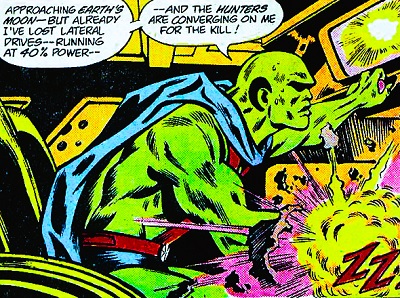
After an effective two-page build up, the action began, as J'onn J'onzz piloted a wounded spacecraft toward the blue world that was once his home away from home. Two of The Marshal's Hunters were in pursuit, but by seeming sheer will, J'onzz managed to maintain his lead. Hunter Commander demanded that the traitor be stopped before reaching his allies, and despite the love they once shared, Hunter Two privately vowed to kill J'onzz to this end. Aboard the Justice League of America Satellite, Aquaman was the first to detect the approaching vessels. Black Canary, Green Arrow, Red Tornado, Elongated Man, Firestorm, Zatanna, Hawkman, & Hawkgirl were swiftly called into action. Barely missing collision, the JLA followed the invaders down to terra not-so-firma. His ship destroyed by Air Force missiles, J'onn J'onzz splashed down in the waters near the Statue of Liberty.

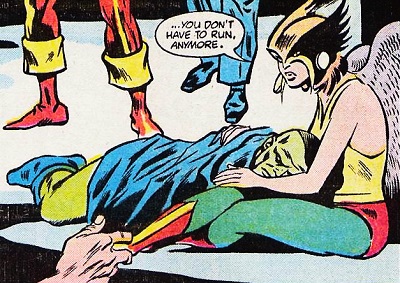
Aquaman dove in to investigate, but was brushed off by an escaping figure from the wreckage that he was able to recognize through telepathy and a scant vision before it turned invisible. "...an old friend... who seems to have turned into an enemy..." The Leaguers had presumed that he was still with his fellow survivors in another star system, resettled on "Mars II." Speeding away on some unknown mission, an overzealous Nuclear Man tried to steam the Martian out of the water, only to be chastised by the fairer Winged Wonder. "J'onn's our friend, Firestorm. Something's driven him to act desperately-- but he's still our friend!" Hawkman surmised that he had been running for days without food or sleep, and even without the hotfoot, J'onzz soon collapsed into Shayera Hol's arms.


Jones was taken to the United Nations to recover, where the disbelieving U.N. Secretary heard the League's tales of Commander Blanx causing the Blue Flame of Mars to rage into an inferno that rendered the world uninhabitable. J'onzz explained that three Terran weeks earlier, he had determined the true fervor of the Red Brotherhood, a nativist, fascist collective of mostly young militiamen seeking to abandon their subsistence existence on Mars II to return to their home planet. Months earlier, a masked ally named Challenger had found an destroyed the Viking 2 rover on a pilgrimage to Mars, and the charismatic genetically-engineered militant leader The Marshal would use its intrusion as pretext for an invasion of Earth. So convincing was he that even J'onn's lover J'en had her simmering anger weaponized towards a successful takeover big against the current government within the week. Forewarned by his investigation, the Sleuth from Outer Space evaded the imprisonment and death that befell resistors, and managed to escape in a scout ship.

Shortly after recounting these events, a warship appeared outside United Nations Plaza, and Challenger emerged. This being offered to accept humanity's surrender, so that they could be interned in camps for a single generation, as a sign of Martian mercy. The Manhunter from Mars called out this plot of slow genocide, but was in no condition to resist at this time, as Earth was afforded one day to answer to the Marshal's terms...

"War -- of the World?" was by Gerry Conway, George Tuska, & Alex Nino. I've often written that DC Comics house ads featuring the covers to this debut and the final issues of this arc were among my first, in not the first, exposures to the Alien Atlas. You should have no doubt that I wish the interiors matched those glorious Martian images rendered by Chuck Patton and Dick Giordano, but I was still happy with the initial chapter of the tale that, as announced on the cover, brought the Manhunter back to comics!

Monday, August 2, 2021

JLA: Year One #12 (December, 1998)


The Daily Planet buzzed over Earth's heroes beating back the Appellaxian invaders. Two generations of Green Lanterns & friends saved Metropolis. Black Canary & the Blackhawks had an Iwo Jima moment in DC. Aquaman, the Sea Devils and others were in... um... ocean? Hawkman, Hawkgirl, Shining Knight, and Black Condor fought avians in... air, and Martian Manhunter had to listen to them wonder how the aliens knew all their secret identities. Awkward.

Kalar took out his frustrations on Stonehenge, where a teleporting Vandal Savage used the mindwipe device to take out a group of Appellaxians, and also took offense at the insult to his design. On to St. Louis. In a brilliant moment, the Atom shattered a crystal proxy by enlarging slightly in one of its flaws, but the explosion knocked Ray Palmer out, leaving his tiny form to be caught in the palms of Doll Man. In Paris, Molly Mayne reported on the Global Guardians. In Central City, Canary and Flash reunited, as did Barry Allen and Iris West, so Dinah made clear that she wasn't going to be her mother's daughter in a way that would make for two-timing. Also, Green Arrow showed up to flirt.


Martian Manhunter helped clear Peking, but even with Metamorpho and the Doom Patrol, the Great Wall was lost. Despite some gains, there were just too many aliens being fought by exhausted heroes. Even the mystical likes of Dr. Fate and the Spectre faltered. Vandal Savage offered a poisoned chalice, delivered by a shapeshifted Clayface in his image. The device, now set to kill all the Appellaxians on Earth with the touch of a button. The League debated. Aquaman and Flash leaned yeh, Canary and Lantern nay. Snapper Carr and Martian Manhunter went a third way, filtering the device's ray's through J'Onn's psyche to render it agonizing rather than lethal. The Alien Atlas head warped and mind verged on shattering. Aquaman whispered, "I'm here, J'Onn, my friend. Open your mind to me... Open your mind... to us." The League lent their own psyches to the filtration. The mystics creating a portal to Appellaxia, and those that didn't walk through it were tossed in. Savage wanted the League complicit in an act of vengeance. Canary insisted, "We're not about vengeance... we're about justice!"

Flash noted, "I'll say it again, J'Onn. You never fail to surprise us. That was one incredible risk." J'Onn felt he owed a debt to everyone there for the way he'd compromised them, which Canary assured with a kiss was "--Paid in full. Let it go. We will." Hawkman asserted that the Justice Society was proud to pass the torch, and Superman stated that there could be no greater honor than to serve at their side when needed. Planet headlines announced future victories against Amazo, (an anachronistic) Despero, and Kanjar Ro. Aquaman removed the plague commemorating the Appellaxian casualty of their first missio, and thought the surface dwellers had done a nice job pulling together. There was a very forced moment where Black Canary likened herself to a flower blossoming and a bunch of stuff about hers and Flash secret identities being trains going in different directions, yadda yadda. Green Lantern put forth the notion of expanding the roster, beginning with Green Arrow, to the questioning of Dinah and Barry. They took it to a vote. As it turned out, the identity of the secret financier Simon Carr continued to keep was none other than Oliver Queen. "The Irony is just to wicked."


"Justice for All" was by storytellers Mark Waid / Brian Augustyn / Barry Kitson with inker Michael Bair. This extra-length finale didn't take so long to read or to write up, but I put it off because of all the expected listing of names and locations and this happened and that happened. All the toys got set up in their displays and the good guys won. I appreciated that this series made a point of spotlighting the original Blue Beetle, often overlooked in DC history as one of the earliest published super-heroes (thanks to his originating at another publisher and not moving to DC until after Gerry Conway and Roy Thomas were heading out the door.) Still, fanboy here, so can't quite forget that the Seven Soldiers of Victory should have still been separated and lost in time.

Overall, the story is nice and pleasant, with no small amount of nostalgia both for Silver Age comics and even then-contemporary ones. There are some great bits and classic character moments. The whole premise of a super-alien with total recall keeping filing cabinets full of excruciatingly sensitive data about masked heroes on paper in filing cabinets behind a false wall is about the dopiest I could point to off the top of my head. It worked way better as encrypted files on the Bat-computer in "Tower of Babel." All the Appellaxian stuff goes on for too long, and I wish we'd had more single issue spotlights and attention to period detail. Then again, they tried that with the quasi-sequel Incarnations, and maybe not so much. This is probably my second or third pass reading the material, and my second write-up, so I'm probably done revisiting it unbidden by outside factors. I like it fine, but prefer to skim rather than fully invest as a whole, which is probably why it never got a proper adaptation.

Wednesday, July 21, 2021

JLA: Year One #11 (November, 1998)


Thanks to Simon Carr, the files kept by J'Onn J'Onzz at the Sanctuary were available to exploit. The Appellaxian invaders struck Earth's metahuman community hard and fast, exploiting their knowledge of secret identities and other vulnerabilities. "First, they took Superman." The Atom, Blue Beetle, the Metal Men, Batman, Hawkman, Johnny Quick, and Dr. Mid-Nite followed in turn. Setting up an internment camp on Blackhawk Island, members of the Squadron, the Freedom Fighters, Seven Soldiers of Victory, and the Justice Society could all be seen as being held captive. As the only files removed from the piles were those belonging to Barry, Dinah, Hal, and Arthur, they were the only heroes spared.

The Justice League were in Metropolis, fighting a tiny portion of the 7,000 or so Appellaxian proxy bodies alerted to the threat Earth posed, intent on wiping us out. Aquaman was randomly shouting orders to the team while discussing with Snapper Carr how Uncle Simon's Appellaxian, Kalar, evaded Martian Manhunter's telepathy by loosening his psychic grip as needed. Simon was barely aware of any changes to his consciousness. Martian Manhunter had only just caught a falling Green Lantern when he soon after took another tumble, thanks to a depleted power battery. After over 24 hours of continuous fighting, the League was broadly tapped out, but not so much that the Alien Atlas couldn't guide the Flash to a locker at Ferris Aircraft housing an invisible power battery. The Emerald Gladiator was soon speaking his oath to recharge midair. Aquaman congratulated the crackerjack teamwork, but also had to acknowledge that Metropolis was lost to the invaders.


In Gotham City, Kalar needlessly obliterated the mind of an Appellaxian fire proxy to take it as his own, surrendering Simon Carr's frail human form. Just as he'd sent the soldier to the plasmgods above, so to had he planned to execute Carr. However, he was spirited away by Vandal Savage, along with the device Kalar had used against his own kind. Meanwhile, things faired just as poorly for the League in Midway City, though Barry scored a kiss from Dinah in a moment of weakness. The Scarlet Speedster had wondered aloud "What... would the JSA have done," but suddenly struck upon his own inspiration.

Via the undervalued "talks to fishes," Aquaman knew where in the Atlantic Ocean the metahumans were being held. Almost as soon as the League arrived back at the sanctuary, they were captured by Appellaxians exploiting their specific vulnerabilities. Soon, the League was on Blackhawk Island, and Green Lantern was warned not to try anything, or his yellow bonds woukd squeeze the life out of him. A demonstration was provided, and Lantern screamed in such pain that it blew a hole through an Appellaxian's chest. "His" power ring had disguised the League as one another, so that Black Canary easily brushed off Lantern's bonds, while Hal Jordan was hardly bothered by a cage of fire, and so on. Soon, Flash had recovered all the heroes' stolen technology, which was being studied by the invaders ahead of their planning to do the same to the metahumans. Suddenly, the prison camp was becoming the staging grounds for the super-human resistance army...


"Stalag Earth" was by storytellers Mark Waid / Brian Augustyn / Barry Kitson with inker Michael Bair. It will never not drive me nuts that DC went decades pretending like everyone from the JLA to Speedy were active before Robin the Boy Wonder just because of stupid "Batman: Year Three." Real time, the Dark Knight flew solo for one year and one month, but editors and dirtbag fandom keep trying to erase one of the greatest characters in all of comics because grimdark. Don't even get me started on Wonder Woman. Anyway, it's always fun to see heroes get took, and leaving them behind fences has a resonance today following Gitmo and refugee detentions that may have been fuzzier to readers in '98 over a half century removed from the Japanese internments of World War II. Seeing these costumed prisoners of war liberate themselves might have had more "oomph" broken up by a cliffhanger, but the resolution was appropriately clever and Silver Agey for a series rooted in nostalgia. Neat to see so many heroes from across DC's history all in one place, centering on their first couple of decades so that we're not suffering any Infinitors or New Bloods or whatever. It's also fun because of how many DC acquisitions are present, published by different companies in the beginning, with few integrating into the DC Universe until the 1970s. It's the sort of thing children of the Greatest Generation could scarcely dream of when they were all publishing contemporaries.

Monday, July 12, 2021

JLA: Year One #10 (October, 1998)


"It is the worst nightmare of a man who can be felled by a candleflame. The sky is on fire." Given their role in igniting the blaze to exploit Martian Manhunter's greatest vulnerability, the Justice League remained quick to blame him for the outcome. Aquaman especially is a jerk, pointedly referring to him again as "alien" and stating "We already know that, even for a land-dweller, you're a lying schemer! What other conclusion are we to draw? Locus is changing the Earth to suit you! You're the eighth Appellaxian!" Never heralded as a detective, Aquaman took an energy blast to the back from armed Locus proxies. While the dysfunctional, paranoiac League tripped over themselves beating Locus back, the Alien Atlas ripped the terraforming device to pieces. This was done at personal expense, as J'Onn was severely burnt in the process.

The League abandoned the deathly still Manhunter to pursue Locus through a portal to one of their secret bases. The Aryan leader of Locus confirmed their plot to render the planet uninhabitable to humans while forcing a return to Pangaea. Somewhat recovered, "The Martian" traced the League to the Locus base, smashed through the ceiling with Laser Vision blasing, and demanded "Get away from my friends!" The League were audibly pleased and impressed. Green Lantern readily conceded leadership to Flash, who directed him to keep the continents in place until they could stop Locus' machines. J'Onn eventually began to take a pounding from the purple proxies, too weak to focus on turning immaterial. Flash moved his teammates to safety, then used super-speed to eventually determine the passwords to switch off Locus' contraption. Barry then asked J'Onn to use his telepathy to find a way to restore the proxies' minds to their human bodies. The probe instead set off a fatal neuroshock to kill the Locus soldiers and send their secrets to the grave with them. J'Onn felt like he was dying himself, and the heroes were left standing amidst piles of bodies. At least here Aquaman called for the Alien to get out of their thoughts before his own were snuffed.


Back at the Secret Sanctuary, J'Onn J'Onzz was interrogated over his stalking of the League members in their private lives. "For years, I have been stranded on a world not my own... one that has a history of being... unreceptive to those who are different. One in which my senses are dulled by the simple light of a match... my life endangered by the flare of a campfire. Alone, in hiding, my survival depended on my powers of observation... of gathering and chronicling information on the motivations of the strangers around me. Recently, buoyed by the world's acceptance of you and others like you, I went public in search of kinship... During our first encounter, I watched you exterminate an alien force you knew little about... and take pride in that... We keep one of their corpses in the trophy room. I did not want to fear you people. My instincts told me you were good and noble. But you are, after all... still human. I needed to know more about you to guarantee my own safety. Foregoing an invasive mindprobe, I instead followed you with my enhanced senses... tracked you using an array of identities. I have no one to rely upon but myself. I did what I had to... to survive."


The team began to squabble amongst themselves again, and Black Canary despaired that they really didn't know each other at all. After a pause, Barry Allen chose to unmask and introduce his true self. Dinah Lance, Hal Jordan, Arthur Curry, and John Jones followed suit. The tension was broken, and trust was rebuilt. However, the super-heroes reasserted when a bloodied and battered Snapper Carr stumbled upon them. He revealed that Uncle Simon was the eighth Appellaxian, and had tried to kill him. Then a NORAD alert sounded, and the team rushed onto the beach to see a sky full of invading alien spacecraft...

"Heaven and Earth" was by storytellers Mark Waid / Brian Augustyn / Barry Kitson with inkers Michael Bair & Mark Propst. The quality of embellishment was more varied this issue, but the art made excellent use of small figures in wide spaces to minimize the power and presence of the Justice League. Where there had been a lot of forced O'Neill/Englehart conflict amongst the heroes, their recovery process offers a lot of fun moments to showcase super friendships. These people should like and support one another, or to put it in my preferred terms, they should be DC instead of Marvel. This story also features one of the all time great J'Onn J'Onzz speeches, explaining his character and how he relates to the heroic community.

Monday, June 28, 2021

JLA: Year One #9 (September, 1998)


Snapper Carr called the Flash back to base after days of it's being empty. "...morale's a little low. I can't believe J'Onn betrayed us like he did... Canary's cynical as it is, and Aquaman... I keep expecting him to swim off in disgust. He's just waiting for the rest of us to turn on him now." Snapper jabbed that he hoped they could set aside their paranoia long enough to save the world from three simultaneous globe-threatening climate disturbances, and everyone appeared to respond to the distress signal except J'Onn. Possibly not having seen each other since the confrontation, Flash asked about Green Lantern's pursuit of J'Onn. "I've searched high and low. Nothing." In truth, the Manhunter was present, invisibly undetected, and left for a third location after the rest paired up for separate priority targets.

The Flash was uncomfortable with his physical proximity to Black Canary while running to the Arctic, and she was put all the way off when he let slip that he had less a girlfriend and more a fiancé. Both had trouble sleeping at night knowing J'Onn was out there with all their secrets, presumably telling them to Locus. The pair still succeeded in bypassing a flaming giant Locus proxy body agent to destroy the machine that was melting the polar icecaps.

At the Mariana Trench, Aquman asked why Green Lantern was always giving orders, then belly-laughed at his answer. "You're not the leader. Flash is the leader! ... J'Onn, Canary, and I talked about this weeks ago. It's obvious to us!" The revelation poked leaks in Lantern's energy construct bubble, which would be much needed against a giant Locus agent sea monster. The heroes tricked it into destroying the second atmosphere-altering machine.

Locus agents collapsed Vandal Savage's base on top of him, but he survived by hiding in a sarcophagus, plotting revenge.


The eighth Appellaxian had failed to launch, but was found and freed by Locus, who eventually inserted it into the human body of Simon Carr. After four months of nightmares and a loss of control, Simon finally confided in Snapper, who tried to alert the Justice League. Instead, he had his face smashed through a computer monitor by Uncle Simon.

The machine in California's Redwood Forest was the lowest priority, so the pairs of heroes reconvened there, only to find J'Onn J'Onzz working the device. Green Lantern thought that cleared up any lingering doubts, assuming the Alien Atlas was guarding it, missing entirely the downed Locus proxy body off to the side. The Flash councilled against acting too rashly. "J'Onn's always been full of secrets. Suppose he neglected to tell us about his 'deathvision' or something. We only know one way to take him down for certain... and that's to take advantage of his one weakness." While Flash ran a ring of fire on the ground around J'Onn, Green Lantern punched him with a giant energy fist. J'Onn pleaded with them to extinguish the fire, but Aquaman popped him one while declaring "Not a chance, traitor!" Then the enormous explosion happened. "I tried... to tell you... to keep the fire away. The machine... I was attempting to shut it down safely. It was pumping... methane-based gases into the atmosphere! Not only are they deadly to human life... they're flammable!" Never mind that they knew about J'Onn's weakness because he told them, but hey, only you can start forest fires!

"Change the World" was by storytellers Mark Waid / Brian Augustyn / Barry Kitson with inker Michael Bair. In 1997, Grant Morrison gave an interview to Wizard Magazine for a special edition devoted to JLA, featuring sections with his thoughts on each member. "When I talk with other writers about JLA, a lot of them tell me they don't like the Martian Manhunter, and think that if there was going to be a story where someone betrays the JLA, then he's the guy who would do it. I see him much differently. If someone was to betray the JLA, he's the last person who would do it." Wizard stated his rationale was that Manhunter was the most stalwart member, in good times and bad, specifically referencing the Post-Crisis contrivance that he'd been a member of every incarnation. Obviously that wasn't true of the actual publishing history, and cue a slew of writers having Manhunter either betray or quit the team in some fashion. Ultimately though, Morrison was right, because fans roundly rejected or ignored these hot takes and pestered DC to get J'Onn back on the team. Anyway, I feel like Waid also agreed with Morrison, and did his best to explore that angle in a "safe" environment to abort any of those other nefarious writers' plans. The Manhunter isn't entirely in the right during this maxi-series, but the League is very in the wrong with regard to their treatment of our boy.

1990s, Aquaman, Black Canary, Flash, Green Lantern, Justice League of America, Martian Manhunter, Retcons, Vandal Savage

Thursday, June 24, 2021

JLA: Year One #8 (August, 1998)


Locus' plans were near fruition, thanks to the purple gengineered host bodies derived from Appellaxian DNA. Robert Anderson's last day as a fully human member was defined by distraction and detachment, even from Locus itself. After years of knowing Mr. Genuardi at the neighborhood store, Anderson refused to remember his name, even as he inquired as to the health of Anderson's brother. A dinner invite from a sunny married couple in his building was refused. Robert took his girlfriend Linda out to dinner for a one-sided tearful break-up, as he emotionlessly asserted "I just don't see a future for us" while imagining the smoldering corpses of everyone in the restaurant. At Rolling Hills Mental Hospital, "Bobby" saw his intellectually disabled brother "Stevie" for the last time, as he again blames himself for the Frankenstein-style accidental drowning of their sister, Janie.

Back at the sanctuary, Green Lantern angrily threw Superman's chair into space, ignored Black Canary's personal inquiries, and became a unappeasable martinet with his teammates and associates. While most of the League focused on Superman's lame "My time is not my own" excuse, Aquaman rightly noted that the more interesting comment was the Man of Steel's having fought another Appellaxian during their invasion. If the League missed that one, who's to say if there weren't others? Snapper Carr hacked into a bunch of government databases on satellites, and sure enough, he counted eight meteors on the day the League was born.


After a snarky comment while searching Star City Harbor for signs of the meteor, Green Lantern was called out for being a jerk by Green Arrow, as well as by Aquaman. Flash explained the Superman scenario, and apologized for rubbing any salt in the wound of Arrow not having been asked to join. The Emerald Archer displayed maturity over Lantern, chiding "What a baby. He's got to learn to take the blows..." Meanwhile, a Martian alternative to capacitors was offered to Snapper Carr for the headquarters, and he made the cringe joke "Mighty human of you" before immediately expressing regret to the Green Dude. "Think nothing of it, Snapper. It is a compliment... in a way. Over these past few weeks, I have learned a great deal about being... human." After, Uncle Simon was sweaty and acting weird, asking Snapper to keep an eye on J'Onn J'Onzz specifically, to see that he didn't do any unwanted snooping. Elsewhere, the brief turn of the Blackhawks acting as costumed super-heroes ended with them shedding their ridiculous short-lived affectation. Also, Barry Allen and Iris West were having relationship troubles over his growing affection for Black Canary and secret double life.

While crawling through ducts to set up more requested surveillance cameras, Snapper accidentally looked in on J'Onn's private quarters. Alarmed by what he saw, Snapper began filming. He immediately showed the footage to the human members of the League, declaring J'Onn a spy. The Manhunter was recorded shapeshifting between various identities, including Mike the cop, Detective Paris Jackson, F.A.A. investigator Lora Denton, and Coast Guard Officer Perez. The League smashed through the wall of J'Onn's private quarters demanding answers, only to discover detailed files on Earth's metahumans like the Atom, the Metal Men, Metamorpho, and the Spectre. Black Canary finally realized that J'Onn had once called her by her real name in battle, only heightening her feelings of violation. Aquaman felt that it was an obvious mistake to have taken Manhunter at his word, and wondered if the deception was so deep as to cover for his being the missing Appellaxian. J'Onn asked for trust, but in a new reason for calling him Snapper, "NO! Why should we? Why should we believe anything you say?" Manhunter started to fly off, but was caged by an energy construct, Lantern declaring "Forget it, alien! You're not going anywhere!" A little weird that the Alien Atlas used invisibility and presumably malleability but not intangibility, blasting through the roof to escape the base. Lantern gave chase, while J'Onn's only (barely) defender The Flash smashed his globe of Mars. Rude.


Mr. Anderson was not another identity of J'Onn J'Onzz, in case you were wondering. He finally committed to reengaging with his life, and tried to warn the Justice League about the Locus plot. While attempting to make his way into their base, he was discovered and shot dead by Simon Carr, who branded him a traitor to Locus.

"Loose Ends" was by storytellers Mark Waid / Brian Augustyn / Barry Kitson with inker Michael Bair. More than half the series has been noodling and character work, so this issue was almost jarring in its use of a one-off POV side character and throttling acceleration of the plot. Not so much a slow burn ratcheting tension and more the sudden panic of realizing the big test is coming up and you need to start cramming. Everything was in place already, but the contrivance of it all hitting at once with peak histrionics was an artificial turn following seven relatively languid issues. The writers did such a great job of indicating Hal Jordan's toxicity in a story clearly informed by his fall from grace a few years earlier that I still can't accept his redemption arc under Geoff Johns. It was just too clearly another example of white guys always getting another chance, even with the blood of an entire corps and parallel universes on his hands. Your mileage may vary on J'Onn J'Onzz being the first non-white member of the League, but the othering portrayal here leans hard into that aspect. Jordan especially said "alien" with a hard "r," and while J'Onn's trespasses were grievous, the reaction went full Karen.

1990s, Aquaman, Black Canary, Flash, Green Lantern, Justice League of America, Martian Manhunter, Retcons, Superman,

Friday, June 18, 2021

JLA: Year One #7 (July, 1998)


The Gotham City Executive Club could barely tolerate the rest of the Justice League's attire, but J'Onn J'Onzz's mankini was entirely unacceptable. Shapeshifting into what probably seemed like Tony Stark in a tuxedo, but what true fans would catch as a callback to Marco Xavier, the Martian was finally allowed passage. Once inside, Green Lantern led the team in an inquisition of Simon Carr, as it was suddenly untenable to have a mysterious benefactor giving them likely billions of dollars in support with no questions asked. "For all we know, Vandal Savage could be holding the purse strings!" Weirdly gendered phrasing from Black Canary. During this rather unnecessary public spectacle, Maxwell Lord tried to bet Bruce Wayne over who could "nail" Canary first (not-so-oddly gendered phrasing,) but Wayne was all *who are you* and *this is boring* about it. Both Wayne and Lord had no patience for the more prejudiced club members treating the League as riffraff, with Lord expressing a keen interest in turning them into his personal army. Foreshadowing, both intended and unforeseen. Speaking of, the Marco Xavier form was abandoned by page 3 for effect when The Sleuth from Outer Space affirmed that Carr was telling the truth because "I read his mind." I believe J'Onn rightly asserted on the "ride home" that he'd previously disclosed this ability, but the team had a delayed freakout over the implications. "I'm sure J'Onn wouldn't invade our private thoughts... right, J'Onn?"

In her personal time, Dinah Lance hashed out her beef with mom over coffee with friendly Officer Mike. Cut to the various new supporting cast members who've inserted themselves into the League's civilian lives to gather data and build intelligence files. The dossiers were hidden behind a holographic wall, and there was some questioning the ethics of manipulating the team members, assuaged by having "much at stake". Locus saw value in such files digging up "dirt," though their leader was content to simply allow the League to be distracted by other threats as they continued their own agenda unmolested. Genegrafting their minds into superior new bodies would assure their survival in the coming holocaust. Boy, this issue is full of problematic phrasing, as even by the '90s the term "holocaust" was firmly associated specifically with the Nazi campaign of genocide, though as with "ghetto," later association doesn't negate a word's independent origins.


There's a two page spread of the Justice League's unrecorded missions, battling the Invisible Destroyer, Icicle, Gorilla Grodd, and the "phantom doom." Typically, this would be where you'd reference actual stories from the League canon to establish a time frame, but the creators chose to frustrate future wiki contributors with ahistorical matches involving villains individual Leaguers had already beaten on their own. Clark Kent was doing a story on the team for the Daily Planet, and caught sight of them battling one another while mislead by an illusion cast by Xotar the Weapons Master, one of their earliest foes. Superman's heat vision slagged whatever literally futuristic device Xotar was employing, and clear-eyed, the League turned their attention toward their true enemy. Green Lantern embarrassed the team with a ham-fisted error, but clean-up was a snap with the Man of Steel pitching in. Superman smashed a "time-porter," and Xotar was seemingly flung back to his starting point 10,000 years in the future. Still, Lantern was staring daggers at being upstaged, while the rest of the starstruck team gave Superman a tour of their headquarters (with a security system incorporating Martian technology.) At the urging of Aquaman and Canary, the Flash finally offered Superman League membership (seconded by Arthur.) In an abrupt chapter close, Superman turned them down, retroactively stripping Metamorpho and Black Lightning of their privileged status as first refusals.

"The American Way" was by storytellers Mark Waid / Brian Augustyn / Barry Kitson with inker Michael Bair. I enjoy the crisp, dark line that Bair provides, adding just the right touch of edge and mood while still maintaining Kitson's overall genteel Silver Age quality. Sekowsky drew the original stories, but he was an atypical DC artist, with his awkward, rough-hewn figures and stylized, angular backgrounds. This series feels like the Justice League being reclaimed as part of what Jacobs & Jones called DC's 1950s "Frigidaire" house style of clean, clear, antiseptic, conformist commercial art. That may seem like a knock, but after the grotesque excesses and perilous upheaval of the Chromium Age, this was a comfort to aging '90s audiences. The industry had reached its ultimate peak, fractured violently, and plunged to lows that seemed liable to terminally pulp the art form. A pleasant nostalgia piece was entirely called for in 1998, with just enough Image sheen to satisfy the fanboys.

1990s, Aquaman, Black Canary, Flash, Green Lantern, Justice League of America, Justice Society of America, Martian Manhunter, Retcons, Superman, Vandal Savage

Monday, June 7, 2021

JLA: Year One #6 (June, 1998)


At Doom Patrol Headquarters, The Chief used technology mostly cribbed from Robotman's spare parts to offer the Justice League temporary prostheses to compensate for their missing parts. Fitting for the era and for why such devices aren't the focus of Niles Caulder's life's work, the devices are very bulky, cumbersome, inaccurate, and overpowered for use by the general public. With the exception of J'Onn J'Onzz and the fully able-bodied Aquaman, the dismembered Leaguers were also hobbled by doubt, anxiety, and self-pity. In the case of the Manhunter, he had a large dome visor covering most of his head that aloud him to see with poor depth perception and delays as through a fog. Caulder had done his best to navigate the maze of a Martian nervous system, and wondered how many senses his subject possessed. "With my eyes missing? Eight."

The Leaguers weren't sure if they could function well enough to continue, but Manhunter insisted "We... We have responsibilities, nonetheless. Thanks to the Brotherhood, the people of Manchester are equally... disadvantaged. We must reclaim the Genegraft device that caused all of this... and reverse it." Back in Alabama, the Brain had used his power ring to build his own energy construct castle, and refused to surrender any of his ill-gotten gains to the Locus attack force buzzing outside. The Brain wasn't using his, simply employing the League's eyes, voice box, and legs for natural purposes. He focused solely on the ring, unaware of its vulnerability to the color yellow and limited charge. Robotman and Aquaman not only made a fine pair... but they also exploited those weaknesses.

Black Canary, Martian Manhunter, and Elasti-Girl were the second group. Rita Farr tried to offer solace over her partners feeling like freaks, but J'Onn J'Onzz did her one better. "Which is what puzzles me most about Earthlings-- How they can perceive such differences between themselves. Even with my eyes, I could see that people were distinct... but not truly different. Not enough to drive such wedges between them. Some days, I fear that I will never understand the artificial divisions you create among yourselves. Other days... I fear I shall... I've been meaning to tell you, Ms. Farr, how disappointed I am you're no longer making films... When I first came to Earth, television was my window to language... to culture. I saw many of your 'chiller' pictures, and... well... I suppose I became a fan." Elasti-Girl gave him a kiss on the cheek, then saved the Leaguers from Monsieur Mallah when they proved useless against him.


Green Lantern, Flash, and Negative Man were clearly the most effective fighting unit, though what exactly caused the castle to collapse was never made clear. Regardless, The Brain still massacred the Locus forces and imprisoned most of both super-teams with his power ring. Canary tried to administer first aid to one trooper, who spoke of a coming holocaust. Flash and Aquaman teamed up to bring an end to the matter at hand, as the Sea King used his superior will power to command a ring construct cutlass to decapitate The Brain. Hal Jordan confided to Larry Trainer, who had recognized his fellow pilot, that he was shaken to see the ring used for a potentially lethal action (aft-shadowing "Emerald Twilight.") Every body was restored, and the two teams gently ribbed each other about dibs on hero of the day Aquaman. Rita assured J'Onn that Sigourney Weaver would have approved of him, and explained to her cohorts that the heroism they'd learned from being ostracized from society simply came naturally to the League.

"Sum of Their Parts" was by storytellers Mark Waid / Brian Augustyn / Barry Kitson with Michael Bair & John Stokes. Haven't read this issue in a couple of decades, so it's fun to rediscover the Doom Patrol from a place of greater knowledge. Madame Rouge makes a good case for how stretching powers work better for villains willing to fully exploit them for creep value. Cliff Steele really is just Ben Grimm at this point. It's fun seeing the JLA riff of character logos being statted into the openings of spotlight scenes, but with the twist of lesser-knowns like Black Canary and Negative Man. I'm guessing they're still using Xerox instead of Photoshop though, because they are tiny with a curious disparity in sizes. It would have been nice to have gotten an older vintage Manhunter logo than 1987, but it's still his best one, and DC's later offerings since have been so hideous that it's more than welcome to see. Also, I just realized from this issue that one of the most endearing aspects of J'onn is that he's the Linus van Pelt of the League. He's the one who'll grind the story to a halt to explain the subtext in a heartfelt but objective way. It's a comic book, so that's exactly what super-heroes should do, and anyway, Linus is the best character in Peanuts. Not sure if that makes H'ronmeer Baby Jesus or The Great Pumpkin, but there it is.

1990s, Aquaman, Black Canary, Doom Patrol, Flash, Green Lantern, Justice League of America, Justice Society of America, Martian Manhunter, Retcons,

Monday, May 31, 2021

JLA: Year One #5 (May, 1998)


Coast Guard Officer Perez was almost caught in the Secret Sanctuary by Snapper Carr while at the meeting table going through files regarding the League and referencing Locus. Hmm. Speaking of, J'Onn J'Onzz called a meeting to discuss his extensive findings about Locus, alternately geneticists and survivalists, but consistently "ruthless to the extreme." Aquaman was glad that at least one of them was still pursuing the case (conveniently omitting his own lack of said pursuit,) but when Flash wondered why J'Onn hadn't shared sooner, "It did not occur to me to do so." Again, one of the most thin-skinned and stand-offish members questions the dynamics of a team despite contributing to its toxicity.

The individual Leaguers continued to struggle with work-life-vigilantism balance, with the recent revelations about her mom's affair prompting Black Canary to pointedly question her teammates' marital status. "I am... Or, rather... I was. My life on Mars was rich with a wife and a daughter. Just before an errant teleportation beam brought me to your world, they were taken from me by a tragic accident. To this day, I sometimes think I hear the song of their laughter in the still night air. I am mistaken." Well, anyway, Canary doesn't want to talk about the JSA anymore. Also, this was a tweak to Manhunter's post-Crisis origin, as he previously still labored under the delusion that the pulp-fueled fantasies of Saul Erdel were his true life on Mars. J'Onzz had embraced this fiction in part to escape the painful reality that his people were wiped out by a plague, not an accident. The then-upcoming Martian Manhunter ongoing series would clarify this while removing all vestiges of the Pre-Crisis/imaginary Mars from the narrative.


Manchester, Alabama was either so rural that they still waited anxiously for the delivery of stacks of newspapers, or this story was intended to be set in the mid-80s (there's a Reagan reference.) We're so old, you guys. A couple of men were discussing "the Green guy" from the Justice League, and when one thought he meant "The Martian," the other clarified that nobody in the general public ever talks about the Manhunter unless he's a suspect. Then a bunch of citizens were shot with that Locus "genegraft ray" cannon that takes chunks off of people and aggregates those chunks into humanoid purple protoplasmic minions. It's like Gardner Fox trying to do body horror, appropriate to the villainy of The Brotherhood (of Evil.) This unsurprisingly attracted the Doom Patrol, a heroic team of "freak" accident survivors, provoking the public's reticence to being saved by such a lot.

The arrival of "matinee idols" the Justice League was more warmly received, and the two teams joined forces against the purple people. However, Manhunter warned "Be careful! My telepathy suggests that many of these creatures are melded to innocent, frightened victims!" It was mostly down to the League to route and contain the monsters, leaving them vulnerable to a blast from the genegraft ray that ripped away their key attributes: Canary's vocal cords, Lantern's ring arm, Flash's legs, Manhunter's eyes, and Aquaman's... um, actually, he hung back with the Doom Patrol. But anyway, The Brain created a new body for himself out of the pieces of Leaguers. The Brain is a super-genius whose brain lives in a motorized jar and leads the Brotherhood. I should have mentioned that sooner.

"A League Divided" was by storytellers Mark Waid / Brian Augustyn / Barry Kitson and still "guest inker" Michael Bair. I'd had a few exposures to the Doom Patrol in the past, but never really "got" them. This issue offered me insight that they were influenced by the early, quarrelsome Fantastic Four, but had likely influenced the X-Men, which went a long way toward seeing the potential appeal of the premise.

1990s, Aquaman, Black Canary, Doom Patrol, Flash, Green Lantern, Justice League of America, Justice Society of America, Martian Manhunter, Retcons,

Thursday, May 27, 2021

JLA: Year One #4 (April, 1998)


Even though Snapper Carr had been retconned into being a constant presence within the Secret Sanctuary as resident tech wizard and maintenance man, Green Lantern still manhandled the "handykid" as a suspected intruder, and couldn't be bothered to remember his name. Admittedly, the League had been out all night fighting Starro the Conqueror (with a key assist from the already forgotten Carr,) so they were all likely punchy as they raced off to tend to their day jobs. This left Aquaman indignant, as Locus continued to be a threat, and were less likely to be taking the day off.

Hal Jordan flirted with FAA investigator Lora Denton, but a slip-up inspired by the distraction of the League forced Carol Ferris to ground him. Barry Allen got held up by chatterbox new detective Paris Jackson and was almost too late to prepare dinner for his fiancé Iris West. Here was a second instance of a hero being caught flat-footed by their significant other when asked about their unaccounted-for activities, and I do wonder if artists ever get tired of redrawing the cover to The Brave and the Bold #28. Aquaman went swimming at Ocean World to check on his "imprisoned brothers," and ended up with hysterical guards screaming and pointing guns at him. The angle continued to be Aquaman as "freak" who doesn't understand social norms, but his concern for sea life tracked with his environmentalist streak since the '70s. Officer Perez of the Coast Guard showed up to defuse the situation, and we learned that in off-hours, he'd exposed Aquaman to Planet of the Apes. There's actually several comedic beats like that in this issue that reminded me how funny the writers can be when allowed, and it's also a nice nod to the JLI. There's a moment when one of the Ocean World trainers sincerely took advantage of the Sea King's abilities to check on the marine life's well-being, and lets just say this fictional amusement park got higher marks than real world documentaries would lead one to believe.


I've never been as into Black Canary as I wanted to be, but seeing Dinah Lance dressed for The Matrix with a raven bob certainly helped bridge the distance in that moment. I wasn't well-versed enough in the DCU to fully appreciate Dinah at a birthday party with the retired JSA in 1998, so it hits harder on rereading today. Still weird to have a female character referred to as "Junior," but maybe that was more of a thing with the "Greatest Generation?" Then-recent Starman material had turned a series of '60s team-up stories with Canary into an extra-marital affair, perhaps too on the nose, but still an intriguing development. Seeing the awkwardness between Ted Knight and the widowed former Dinah Drake, especially once deduced by "Dinah Junior" (weeird) was a highlight of the series.

Not going to lie, I did a little fist pump when I saw the sign reading "Middletown Police Headquarters." John Jones helped Diane Meade read her date (Detective Vince Logan) for filth. Meanwhile, Locus had indeed kept busy, securing a Starro tentacle for its regenerative abilities and working with T.O. Morrow & Professor Ivo on promising, under budget projects. They were also plotting mad science to be perpetrated against Blue Beetle as an unwilling "graft donor" captured by the Brotherhood of Evil. They played it coy for most of the issue, but I can all but guarantee you that a stretchy woman and a gorilla in shadow were not cluing me in at this point in my DC fandom.

"While You Were Out..." was by storytellers Mark Waid / Brian Augustyn / Barry Kitson, joined by "guest inker" Michael Bair... for the rest of the maxi-series. I'd noticed the richer, crisper ink line from the second page, and Aquaman's face in the second panel of that page was a dead giveaway. That collaboration would continue for a while, and Bair would rightly (see: Infinity Inc.) help define the look of spin-off/begetter JSA with Stephen Sadowski. I'm a fan of Bair's, and only just realized one of my most treasured pieces has a younger sibling. I'd obviously be curious to know what it went for. Anyway, Bair added that touch of post-modern darkness that compliments the writers' efforts, as the creative team textually and visibly references a Silver Age milieu. It parallels James Robinson's work on their Golden Age progenitors, reflecting a period that was always kinkier, weirder, and more violent than the Justice League's time. Bair lends that little bit of edge, but not so much as to tip it outside of somewhat genteel Boomer nostalgia. Still can't believe how talky and decompressed this series was, but I'm grown, so I can dig it.

1990s, Aquaman, Black Canary, Diane Meade, Flash, Green Lantern, Justice League International, Justice League of America, Justice Society of America, Martian Manhunter, Middletown, Retcons,